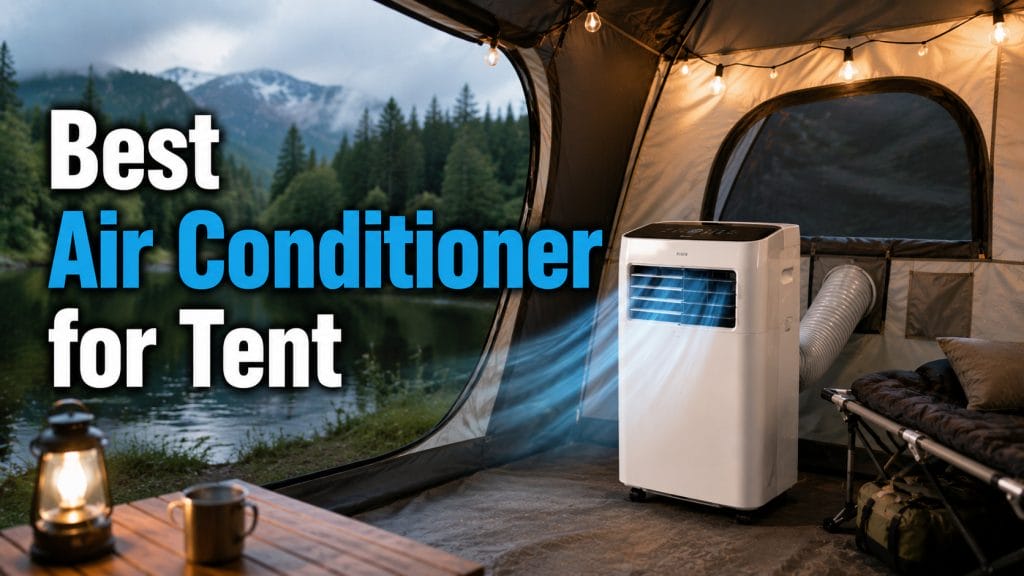
Ever tried sleeping in a tent during a heat wave with sweat pooling under your sleeping bag by midnight? I have, more times than I want to admit, which is why I started actually testing air conditioners built for tent use instead of relying on a battery fan and hoping for the best. After running these through real tent nights and a few RV trips, here is my honest pick for the best air conditioner for tent use in 2026.


1. FO KOKO Dual Hose 6800 BTU Camping Tent Air Conditioner and Heating

This is the most versatile unit I tested, combining 6800 BTU cooling with 7500 BTU heating in a dual hose design that cooled noticeably faster than single hose units I have used. The 30 second cool and 60 second heat response times meant less waiting after setup, and it runs on 110V power, power stations, or EV V2L systems depending on the trip.
Pros:
- Dual hose design cools up to 50 percent faster
- Both cooling and heating in one 34 pound unit
- Multi power compatibility including power stations and EV V2L
- Quiet 45dB sleep mode
Cons:
- Higher price point given the dual function design
- Dual hose setup takes more space to route than single hose units
2. BAYKUL Portable Camping Air Conditioner and Heater

This is the 6 in 1 unit I packed for a fall trip since it handles both cooling and heating in one body. At 28 pounds it is one of the lighter compressor units here, and the compact footprint fit easily into the trunk alongside our other gear. Having both functions in one unit meant no separate heater for chilly nights.
Pros:
- Combines cooling and heating in one unit
- Lighter than most compressor units at 28 pounds
- Compact dimensions fit easily into a car trunk
Cons:
- Detailed mode and noise specs are limited
- Dual function design adds some bulk versus cooling only units
3. BAYKUL 4800 BTU Portable Tent Air Conditioner

This is the unit I recommend for smaller two person tents, since the compact footprint takes up minimal space. The 5 in 1 function set covers cooling, super cool, dehumidifying, fan, and sleep mode, more flexibility than a basic single mode cooler. Everything came included in the box, down to the drain pipe and window baffle.
Pros:
- Compact footprint fits smaller tents easily
- 5 in 1 function set including super cool mode
- Full accessory kit included in the box
Cons:
- 550W power draw requires a solid power source
- Mechanical buttons feel less refined than touch panel units
4. outohome 5200 BTU Portable Tent Air Conditioner
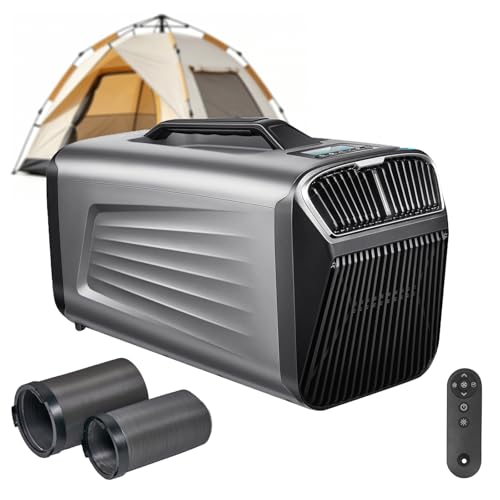
This unit earned a spot for its low power draw, staying under 400W while dropping the temperature by 18°F within 5 minutes. At 32 pounds it was easy to carry with the single hand grip, and the metallic finish held up well after a few dusty trips. The 24 hour timer meant it could shut off automatically after everyone fell asleep.
Pros:
- Low power draw under 400W
- Fast cooling with an 18°F drop in 5 minutes
- Lightweight at 32 pounds with a single hand grip
Cons:
- Sleep mode noise is a bit higher at 46 to 50dB
- Drain pipe still needed above 70 percent humidity
5. GOUKA 6100 BTU Portable Camping Air Conditioner

This inverter based unit stood out for how quickly it installed, since the single hose and tool free window kit had it running within about a minute of unboxing. The app control let me start cooling before walking back to the tent, and at just under 28 pounds it was one of the lightest units I tested this season.
Pros:
- Inverter technology for quieter, more efficient cooling
- Extremely fast tool free installation
- Lightweight at just under 28 pounds
- No drain self evaporating system
Cons:
- Heating output is modest at 3000 BTU
- Higher price point than similar BTU competitors
6. Ashihoti Swamp Cooler Evaporative Air Cooler

This is the unit I reach for when I do not want to deal with any hose or venting setup at all, since it works purely through water evaporation. The 2 gallon tank ran a full 20 hours on one fill, and the 360 degree casters made it easy to roll between the tent and a nearby picnic table.
Pros:
- No hose or window installation needed
- Large 2 gallon tank for 20 hours of runtime
- Lightweight at 12.5 pounds
Cons:
- Not explicitly marketed for tent or camping use
- Evaporative cooling is less effective in humid climates
7. Cybertake S2 Pro Portable Camping Air Conditioner
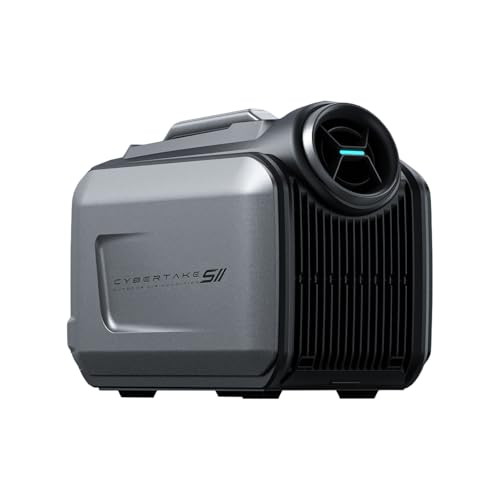
This is the most flexible unit I tested for power sources, running off a wall outlet, a 12 to 24V vehicle connection, or a 48V power station. I used Eco+ mode on a weeklong trip and it sipped power at close to 1kWh per 8 hours, which mattered when running off a power station. The 40dB noise level in eco mode was quiet enough to sleep through.
Pros:
- Three power source options including vehicle and power station
- Eco+ mode delivers strong efficiency at 1kWh per 8 hours
- Whisper quiet at 40dB
- IPX4 water resistant shell for outdoor use
Cons:
- Higher price point than most units on this list
- Remote control and boost converter sold separately
8. Wszrfozn 7000 BTU Portable Camping Air Conditioner

This became my go to unit for weekend tent trips because of how fast it drops the temperature. The 7000 BTU compressor cooled my tent within about 5 minutes, and the drain free design meant no hose unless humidity climbed above 70 percent. At 36 pounds it is heavier than a desktop cooler, but the single carry handle made it manageable to load into a truck bed.
Pros:
- Fast cooling within about 5 minutes
- Drain free operation below 70 percent humidity
- Compact enough for tent, RV, or truck bed use
Cons:
- 36 pounds is noticeable to carry any real distance
- Rated power under 550W needs a solid power source
9. Disaenvir Tent Air Conditioner 3300BTU

This is the lightest true compressor unit I tested at just 15 pounds, which made a real difference hauling gear on a backcountry car camping trip. The safety lock prevented accidental setting changes when packed alongside other gear, and sleep mode kept things quiet enough for a two person tent.
Pros:
- Lightest compressor unit tested at 15 pounds
- Safety lock prevents accidental setting changes
- Compact footprint fits easily in a tent corner
Cons:
- Lower 3300 BTU output suits smaller tents only
- Needs clearance from walls for proper heat dissipation
10. Evapolar evaCHILL Personal Air Cooler

This is the personal cooler I keep in my pack for tent nights when I just need direct relief rather than cooling the whole tent. It only draws 10W, so running it off a power bank barely registers, and the basalt fiber cartridge caught more dust than expected during a dusty trip.
Pros:
- Extremely low 10W power draw
- Basalt fiber cartridge filters dust from airflow
- Runs off USB power banks and car outlets
Cons:
- Cools your immediate area, not the whole tent
- Best in low humidity conditions
11. Tiptop Home 5 in 1 Mini AC Fan

Rounding out the list is the cordless option I keep charged for tent trips, since the 2000mAh battery gives up to 12 hours away from a plug. Freezing the included ice crystal boxes ahead of a trip gave noticeably colder air than plain water, and app control meant I could adjust settings from inside my sleeping bag.
Pros:
- Cordless with up to 12 hours of battery life
- App control for fan speed, mist, and lighting
- Reusable ice crystal boxes boost cooling
Cons:
- App setup takes a few extra minutes on first use
- Personal cooling only, not for a whole tent
Final Thoughts
After running all eleven of these through actual tent nights and camping trips, my honest take is that the best air conditioner for tent use depends on how you camp. For full tent cooling, the FO KOKO, GOUKA, and Cybertake units deliver real compressor based performance with genuine installation flexibility. For simple car camping where you just need personal relief, the Evapolar evaCHILL and Tiptop Home coolers are lighter and easier to pack. Match the unit to your setup, keep a reliable power source on hand, and you will actually sleep through a hot night in a tent.