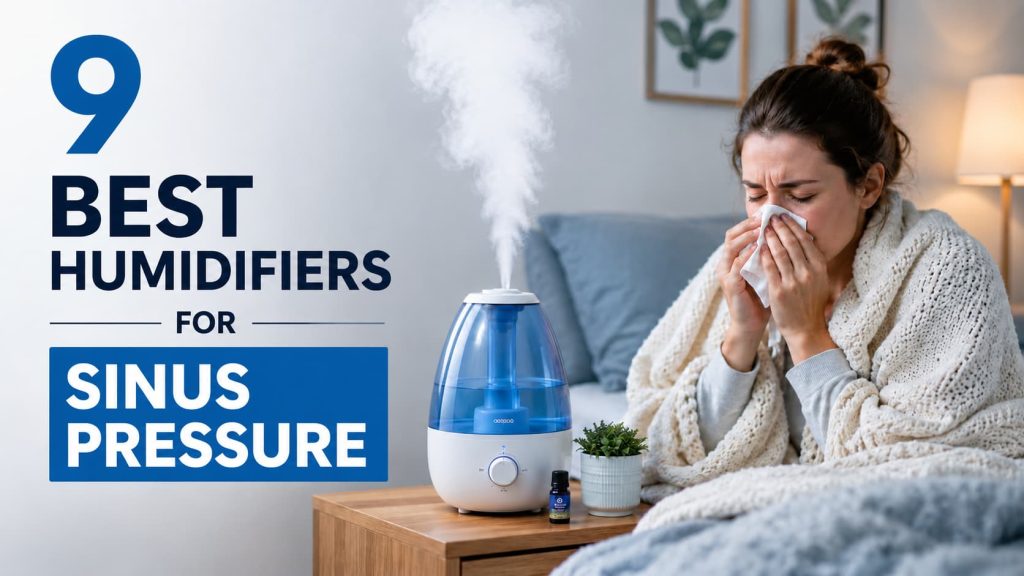
A bad sinus infection last winter left me hunting for anything that could ease the pressure behind my eyes and cheeks, and that search turned into months of testing humidifiers, steam inhalers, and facial steamers side by side. A quick note first, since this matters: persistent or severe sinus pressure, especially with fever or facial pain that will not go away, should be checked by a doctor rather than managed with home devices alone. With that said, here is everything I actually tried and what made the biggest difference in day to day comfort.
1. LEVOIT OasisMist 4.5L Smart Warm and Cool Mist Humidifier

This was the humidifier I ran overnight in my bedroom during the worst of my sinus pressure, and switching to warm mist mode felt noticeably more soothing than cool mist alone. The auto mode kept humidity steady between 40 and 60 percent without me having to check on it constantly.
Pros
- Warm and cool mist options in one unit
- Auto mode maintains consistent humidity
- Reduces white dust compared to standard units
Cons
- Higher price point than basic humidifiers
- App setup takes a bit of extra time
2. Vicks VapoPads Plus with Sinus Relief Formula

I used these VapoPads in a Vicks compatible humidifier during the day, and the non medicated scent gave a mild soothing effect without being overpowering. Each pad lasted close to the full 8 hours before I noticed the scent fading.
Pros
- Non medicated formula is gentle
- Up to 8 hours of scent per pad
- Simple to insert and replace
Cons
- Requires a compatible Vicks device
- Scent strength fades gradually over the day
3. Crane Steam Inhaler and Warm Mist Humidifier, 0.5 Gallon

This dual purpose unit became useful for targeted relief, since I could switch from running it as a room humidifier at night to using it as a personal steam inhaler during the day when pressure felt worse. The whisper quiet operation meant it never disturbed sleep.
Pros
- Works as both room humidifier and personal steam inhaler
- Quiet enough for bedroom use
- FSA and HSA eligible
Cons
- 0.5 gallon tank needs frequent refills for all night use
- Steam inhaler mode is a manual, hands on process
4. Mypurmist Free Ultrapure Cordless Steam Inhaler
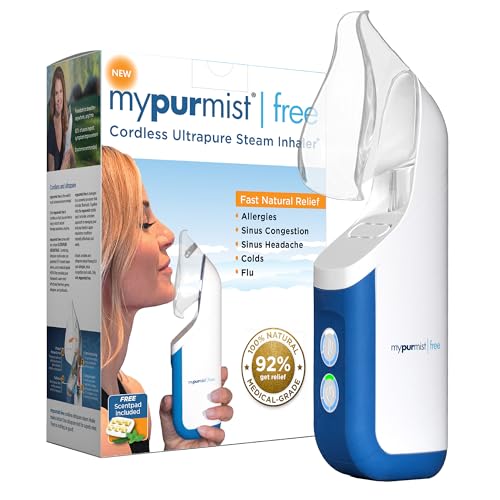
I reached for this cordless steam inhaler specifically during flare ups when sitting near a room humidifier was not enough. Being battery powered made it easy to use anywhere in the house, and the fine micron steam particles felt more direct than a standard humidifier.
Pros
- Fully cordless and battery powered
- Delivers concentrated, targeted steam therapy
- Drug free approach to sinus relief
Cons
- Higher price point than basic inhalers
- Best for short, targeted sessions rather than all day use
5. Vicks VapoPads with Original Menthol Formula
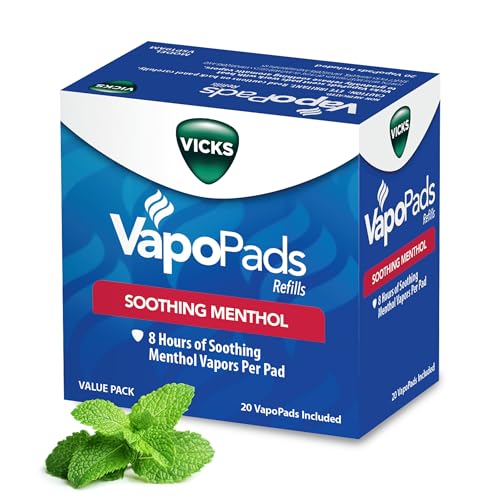
I alternated between the menthol and sinus relief VapoPads to see which felt more effective during peak congestion, and the menthol scent gave a slightly stronger sensation of opened airways. Both pads worked in the same compatible humidifiers without any issues.
Pros
- Strong menthol scent for a refreshing feel
- Compatible with multiple Vicks devices
- Easy 8 hour use per pad
Cons
- Menthol scent may be too strong for some users
- Requires repurchasing pads regularly
6. EZBASICS Facial Steamer with Nano Ionic Technology

I tried this facial steamer as a way to combine sinus relief with a bit of self care during recovery. The ionic steam felt noticeably different from a basic humidifier, and the adjustable nozzle let me direct steam right toward my face for a few minutes at a time.
Pros
- Ionic steam technology feels more penetrating
- Adjustable nozzle for targeted steam direction
- Doubles as a skincare tool
Cons
- Best suited for short sessions, not room humidification
- Requires distilled or purified water for best results
7. Mabis Steam Inhaler with Adjustable Facial and Nasal Mask

This inhaler’s adjustable nasal mask made it one of the more targeted options I tested, since I could direct steam specifically toward my sinuses rather than my whole face. It required no filters, which made cleanup straightforward after each use.
Pros
- Adjustable nasal attachment for targeted relief
- No filters required
- FSA and HSA eligible
Cons
- Small 60ml liquid capacity limits session length
- Manual design requires holding or positioning during use
8. Vicks NaturalCare Cool Mist Ultrasonic Humidifier
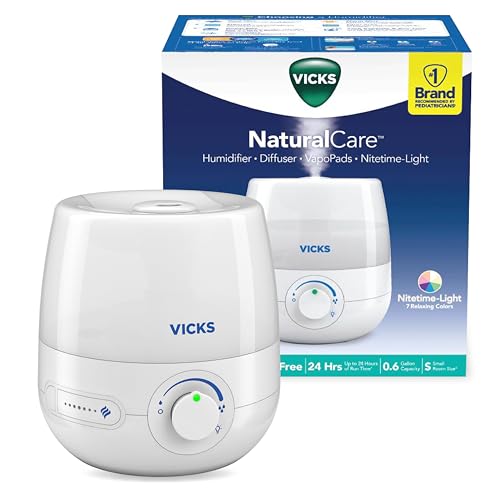
I kept this smaller humidifier in my home office for daytime use, since the compact size fit well on a desk without taking up much space. It ran for a full 24 hours per fill, and being compatible with Vicks VapoPads let me combine it with the scent pads I was already using at night.
Pros
- Compatible with Vicks VapoPads
- Runs up to 24 hours per fill
- Wide tank opening for easy filling and cleaning
Cons
- Best suited for rooms up to 200 sq ft
- Cool mist only
9. 8L Evaporative Humidifier for Large Rooms with UV Disinfection

For whole home coverage during the worst weeks of my sinus pressure, this large evaporative humidifier kept the entire main floor at a consistent humidity level. The UV disinfection and smart AI control meant I did not have to manually adjust settings throughout the day.
Pros
- Covers large spaces up to 1000 sq ft
- Smart AI adjusts output automatically
- UV disinfection helps keep output clean
Cons
- Larger unit takes up more floor space
- Higher water usage compared to smaller humidifiers
Final Thoughts
After weeks of testing both whole room humidifiers and targeted steam inhalers, the combination that gave me the most relief was running a smart humidifier overnight paired with short steam inhaler sessions during the day when pressure spiked. Room humidifiers kept the baseline air moisture steady, while the more targeted steam devices gave faster relief during flare ups. If your sinus pressure is severe, lasts more than a week, or comes with fever, it is worth having a doctor take a look rather than relying on humidifiers and inhalers alone.