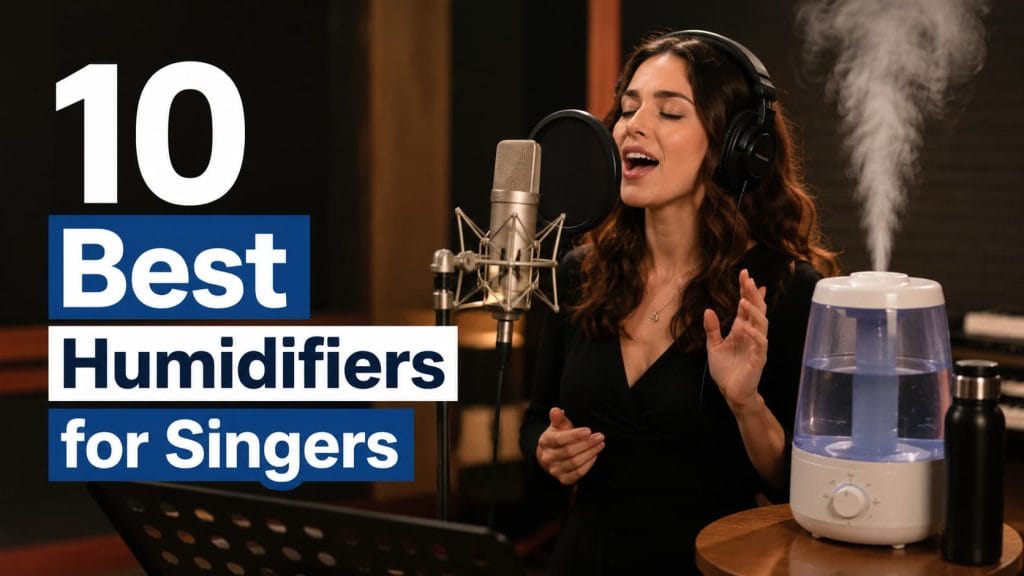
Ever since I started taking voice lessons seriously, my instructor kept reminding me that hydrated vocal cords make a real difference in tone and stamina, and that dry indoor air during winter rehearsals was working against me. I tested ten different humidifiers in my practice room and bedroom to find the best humidifier for singers that actually helped my voice feel less strained during long sessions. Here is what worked, based on real practice routines and more than one hoarse morning avoided.


1. Levoit Top Fill Humidifier, 2.5L Tank

This became my nightly humidifier since keeping my throat hydrated overnight noticeably reduced morning hoarseness before early rehearsals. The 28dB noise level never distracted from vocal warmups, and the top-fill design made daily refills painless.
Pros:
- Quiet 28dB operation won’t distract during practice
- Easy one-step top-fill design
- Consistent overnight moisture supports vocal recovery
Cons:
- 2.5L tank needs daily refills in dry climates
- No humidity sensor for automatic adjustment
2. Everlasting Comfort 2.5L Top Fill Humidifier
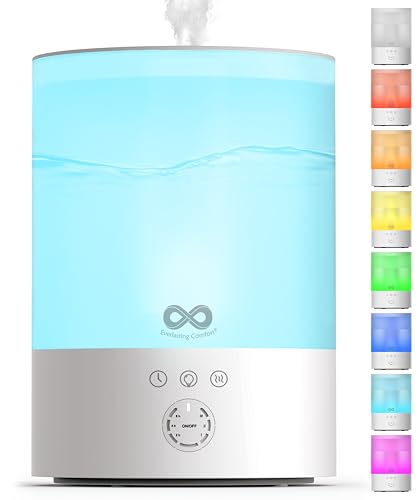
The adjustable mist levels on this unit let me dial up humidity specifically before longer practice sessions and back down for everyday use. The built-in timer meant I could set it to run through a full rehearsal without checking in.
Pros:
- Three adjustable mist levels for custom control
- Built-in 2, 4, and 8 hour timers
- Auto shut-off for safe unattended use
Cons:
- 24-hour runtime is shorter than some larger tanks
- No humidity sensor for automatic adjustment
3. DREO 3L Top Fill Humidifier, New Edition

The humidity sensor on this unit made it easy to maintain a consistent level in my practice room without constant manual adjustment, which mattered since even small humidity swings seemed to affect my voice. The 30-hour runtime meant it rarely needed attention during a busy rehearsal week.
Pros:
- Automatic humidity sensor maintains consistent levels
- Quiet 26dB operation suitable for vocal practice
- 30-hour runtime reduces refill frequency
Cons:
- 3L tank suits smaller rooms, not open rehearsal spaces
- Night light is unnecessary for daytime practice
4. Crane Steam Inhaler & Warm Mist Humidifier

This dual-purpose unit became genuinely useful before performances, since switching it to personal steam inhaler mode gave my vocal cords a more direct, concentrated dose of moisture right before going on stage. The FSA eligibility was also a nice bonus for anyone budgeting vocal health tools.
Pros:
- Doubles as a personal steam inhaler for direct vocal relief
- FSA and HSA eligible
- Whisper-quiet warm mist operation
Cons:
- Smaller 0.5 gallon tank means shorter runtime
- Warm mist requires more supervision than cool mist units
5. DREO 3L Top Fill Humidifier, Black Edition

I kept a second version of this same reliable DREO model backstage during rehearsals, since the same humidity sensor and quiet operation made it just as practical in a shared green room. The black finish also blended in better with a darker backstage setup.
Pros:
- Same reliable humidity sensor as the standard edition
- Sleek black finish suits backstage or studio settings
- Quiet 26dB operation
Cons:
- Nearly identical performance to the other DREO 3L, just a color choice
- Same 3L tank limits coverage to smaller rooms
6. DREO 6L Smart Warm and Cool Mist Humidifier
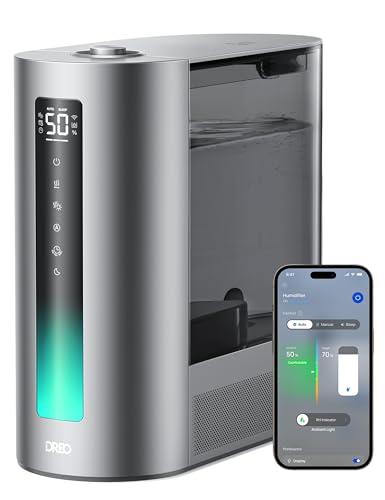
Before big performance days, the fast warm mist option on this unit gave quick relief within minutes, which felt especially helpful on cold mornings before an early call time. The precision humidity control held levels steady with far less fluctuation than smaller units.
Pros:
- Fast warm mist ready in about 5 minutes
- Precise humidity control within 5 percent accuracy
- Covers large rehearsal or living spaces up to 550 sq ft
Cons:
- Larger unit needs more dedicated space
- Warm mist setting requires supervision for safety
7. Frida Baby 3-in-1 Cool Mist Humidifier

Despite being marketed for nurseries, the 60-hour runtime made this a genuinely practical option for my home studio, since fewer refills meant more consistent humidity during long recording sessions. The carry handle made it easy to move between rooms as needed.
Pros:
- Long 60-hour runtime reduces refill frequency
- Carry handle makes it easy to relocate
- Covers larger rooms up to 320 sq ft
Cons:
- Larger size takes up more studio space
- Diffuser feature unnecessary if only humidifying
8. LEVOIT Top Fill Ultrasonic Cool Mist Humidifier

I kept a second version of this reliable Levoit model in my home studio, where recording sessions can run long and dry air becomes noticeable after an hour or two. The same 25-hour runtime and simple top-fill design made it just as practical here as the bedroom unit.
Pros:
- Reliable 25-hour runtime on a single fill
- Easy top-fill design for quick refills
- Quiet enough for recording sessions
Cons:
- Same 2.5L capacity limits coverage for larger rooms
- No automatic humidity sensor
9. MEGAWISE 3.5L Cool Mist Humidifier

This became my choice for longer group rehearsals, since the larger 3.5L tank meant fewer interruptions during multi-hour sessions. At 24dB it stayed quiet enough not to interfere with recordings or group harmonies.
Pros:
- Spacious 3.5L tank reduces refill frequency
- Whisper-quiet 24dB operation
- Adjustable mist levels for fine control
Cons:
- Diffuser feature unnecessary if only humidifying
- No smart sensor for automatic adjustment
10. Homvana 3.6L Top Fill Cool Mist Humidifier

This unit’s SilentSpray technology kept things genuinely quiet during late-night practice sessions when I needed the room humidified without disturbing anyone else in the house. Running close to four nights on a single fill meant one less thing to manage during a busy performance week.
Pros:
- Ultra-quiet 23dB SilentSpray technology
- Runs up to 4 nights on one fill
- Auto shut-off for safer unattended operation
Cons:
- Larger size less practical for smaller practice spaces
- Diffuser function unnecessary if only humidifying
Final Thoughts
After testing all ten of these across practice sessions, recordings, and performance days, the biggest improvement to my voice came from simply maintaining consistent humidity rather than any single standout feature. Sensor-equipped units like the DREO 3L made it easiest to hold a steady level without daily fiddling, while the Crane steam inhaler earned a permanent spot in my pre-performance routine for direct vocal relief. Aim for 40 to 60 percent humidity in practice and rehearsal spaces, stay hydrated throughout the day, and keep the tank clean weekly to avoid introducing anything unwanted into the air you are breathing and singing through.