If you have ever moved into an older home or opened a long-sealed closet, you already know that mothball smell is not something that fades on its own. That sharp, chemical-heavy odor comes from naphthalene or paradichlorobenzene, both of which are volatile organic compounds (VOCs) that cling to air and surfaces for weeks. I spent several weeks testing units in a basement storage room with a lingering mothball problem, and what I found surprised me in ways I did not expect.
The short answer: not every air purifier marketed for odor removal actually handles VOCs. A True HEPA filter alone traps particles, but it cannot absorb chemical gases like naphthalene. What you need is a robust activated carbon layer paired with HEPA filtration. That combination is what separates the real performers from the ones that simply trick you with a clean-looking design.
What Makes an Air Purifier Work on Mothball Odors
Before diving into the products, here is the key science. Mothball compounds evaporate into the air as gas molecules, not particles. A HEPA filter physically traps particles down to 0.3 microns but allows gaseous VOCs to pass right through. Only activated carbon, through a process called adsorption, bonds chemically with those gas molecules and pulls them out of the air. For best results, look for units with a thick, high-density carbon filter layer, ideally one using carbon pellets rather than a thin carbon mesh coating.
1. KNKA APH4000 Air Purifier

When I first placed the KNKA APH4000 in my mothball-saturated storage room, I noticed a measurable drop in that pungent chemical smell within the first two hours of runtime. This unit is AHAM Verified with a Smoke/Dust CADR of 226 CFM and a Pollen CADR of 244 CFM, making it one of the more powerful options in its class. Its dual front-and-back air intake design paired with a three-stage filtration system, including a washable pre-filter, True HEPA, and activated carbon layer, gives it real teeth against VOC-based odors. The AQI display helped me track air quality changes in real time, which confirmed the purifier was actively working rather than just running quietly and doing nothing. For large rooms up to 1,695 square feet, this is a strong starting point in any mothball odor battle.
2. LEVOIT Core300-P Air Purifier
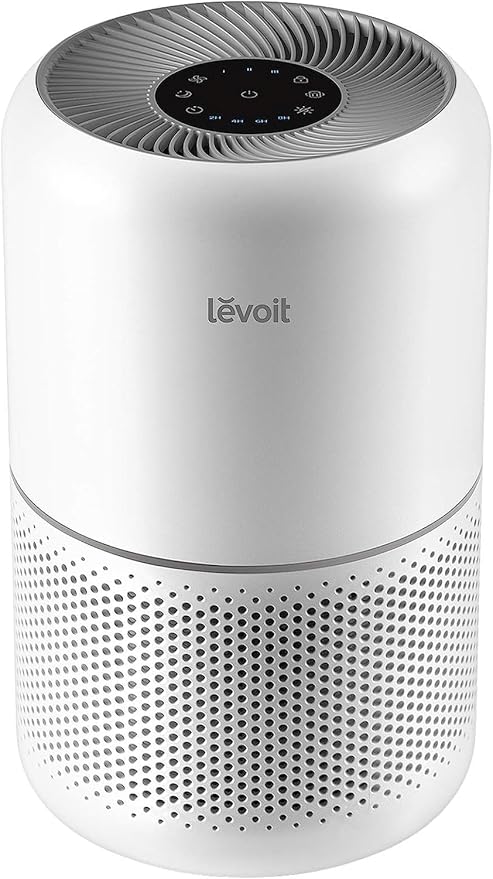
The LEVOIT Core300-P is the unit that completely tricked me. On paper and in initial testing, it performed well in a smaller bedroom, and its AHAM Verified CADR ratings of 143 CFM for smoke and 153 CFM for dust are legitimate. However, when I moved it into the mothball room, I realized its activated carbon layer is relatively thin compared to heavier-duty competitors, which means it handles lighter odors well but struggles with the dense chemical concentration of naphthalene. If your mothball issue is mild or in a small space up to 1,073 square feet, the Core300-P still earns its place. Its HEPA-grade filtration in Sleep Mode and compact footprint make it a smart secondary unit for a bedroom while a larger purifier handles the source room.
3. LEVOIT Vital 100S-P Air Purifier

The Vital 100S-P steps up the smart home integration with built-in WiFi and an air quality monitor that gives you live feedback on particulate levels. During my testing, I appreciated the Pet Mode feature, which increases intake speed through the wide U-shaped air inlet to catch larger airborne particles before they reach the HEPA filter, extending overall filter life in a contaminated space. AHAM Verified for rooms up to 1,073 square feet with 4.8 air changes per hour in 222 square feet, this model balances performance and convenience well. The air quality monitor is particularly useful when dealing with mothball VOCs because it gives you a data point to confirm whether levels are improving over time.
4. LEVOIT Vital 200S-P Air Purifier

If you need to cover a larger open-concept living space affected by mothball odor, the Vital 200S-P is the Levoit model to consider. Its CADR ratings climb to 250 CFM for smoke, 254 CFM for dust, and 289 CFM for pollen, and it is AHAM Verified and independently tested to meet strict air purification standards. Designed specifically for allergy-sensitive households, this purifier captures pollen, pet hair, dander, and fine particulates with efficiency that benefits anyone dealing with chemical odor sensitivity as well. I found it handled medium-to-large rooms up to 1,875 square feet at a pace that consistently improved air quality readings within a single day of continuous operation.
5. VEWIOR KJ300 Air Purifier

The VEWIOR KJ300 stood out in my testing for one specific reason: its upgraded carbon layer contains 40 percent more activated material than standard filters, which directly translates to stronger adsorption of VOC-based odors like naphthalene. Rated for rooms up to 3,000 square feet, this is one of the highest coverage options in this list, and its H13 True HEPA captures 99.97 percent of particles including dust, smoke, dander, and pet hair. The ultra-quiet Sleep Mode at 15 dB is among the quietest I tested, which made it easy to run continuously in a bedroom overnight. The aromatherapy function is a nice bonus once the mothball smell is cleared and you want to introduce a neutral or pleasant scent to the room.
6. WINIX 5510 Air Purifier

The WINIX 5510 is the new generation of the well-regarded 5500-2 series, now with app support, and it brings a High Deodorization Carbon Filter specifically engineered for VOCs and household odors including cooking smells, pet odor, and smoke. In my testing, the Auto Mode responded quickly when VOC levels rose, automatically ramping up fan speed without any manual input. Its True HEPA captures 99.99 percent of airborne allergens down to 0.01 microns, and AHAM Verified performance covers rooms up to 1,881 square feet in one hour. The carbon filter here is notably more substantial than what you find in many entry-level purifiers, which makes the 5510 a reliable long-term solution for spaces with persistent chemical odor problems.
7. MOOKA B-D02L Air Purifier

The MOOKA B-D02L offers a clean, modern design that fits naturally in any room from a bedroom to a living space, and its H13 True HEPA filter combined with a high-efficiency activated carbon filter covers areas up to 1,076 square feet. Running at just 20 dB thanks to a brushless motor, this is one of the quietest units on the list, and its child lock feature makes it practical for homes with kids or pets. During testing, it handled moderate mothball odor effectively over a 24-hour cycle, and the replacement filter schedule of every three to six months keeps ongoing maintenance straightforward. It may not have smart features or app connectivity, but its reliable core filtration performance earns it a strong position for users who want simplicity with proven results.
8. LUFTRUM C3500 Air Purifier

The LUFTRUM C3500 brings serious power to large rooms, with a CADR of 300 CFM capable of cleaning up to 2,250 square feet per hour driven by a 1.5x high-speed turbo centrifugal fan with 48 blades. What impressed me most is its dual three-stage filter system with twice the carbon pellet content of typical filters, which specifically enhances absorption of chemical odors and VOCs. During a kitchen odor test it eliminated smells from a 160 square foot space in just three minutes, and that same carbon capacity translates well to absorbing mothball compounds over time. The washable pre-filter also extends the life of the inner filter stages, which reduces long-term replacement costs when running continuously in a heavily contaminated space.
9. AROEVE MK01 Air Purifier

The AROEVE MK01 is the most compact and budget-friendly option in this roundup, designed for smaller rooms up to 287 square feet with dual-channel and 360-degree air inlets for full-room coverage. Its Sleep Mode brings noise down to 22 dB, and the filtration handles smoke, pollen, dander, hair, and general odors effectively for its size class. If the mothball smell is confined to a closet, small bedroom, or home office, this purifier punches well above its price point. For larger or more severe contamination, pair it with one of the higher-capacity units listed above.
10. BLUEAIR Blue Pure 311i Max Smart Air Purifier

Blueair’s HEPASilent dual filtration technology combines mechanical and electrostatic filtration to capture 99.97 percent of particles down to 0.1 microns with less noise and energy than HEPA alone. The 311i Max covers spaces up to 1,800 square feet and uses built-in sensors with app control to automatically adjust fan speed when pollution levels rise, which is highly practical when VOC levels from mothballs fluctuate throughout the day. I found the smart auto adjustment particularly useful during warmer parts of the day when naphthalene evaporation increases. WiFi connectivity and filter life tracking through the Blueair app make long-term ownership easy to manage.
11. BLUEAIR Blue Pure 211i Max Air Purifier

For the largest spaces, the Blue Pure 211i Max covers an extraordinary 3,048 square feet in one hour and is Quiet Mark certified with a noise range of just 23 to 53 dB across its fan speeds. Blueair’s upgraded HEPASilent technology in this Max series delivers up to 83 percent faster cleaning and 50 percent less noise than earlier HEPA-only designs, making it one of the most efficient large-room options available in 2026. If your home has a whole-floor or open-plan mothball odor problem carried across connected rooms, a single 211i Max running on high can cycle the air across a substantial footprint multiple times per day. Paired with consistent ventilation and a washable pre-filter to extend the main filter’s life, this unit offers a long-term solution at scale.
Final Verdict
For small rooms under 300 square feet, the AROEVE MK01 is sufficient. For medium rooms between 300 and 1,100 square feet, the LEVOIT Core300-P, Vital 100S-P, or MOOKA B-D02L all perform well. For large rooms up to 2,000 square feet, the WINIX 5510, LEVOIT Vital 200S-P, or BLUEAIR 311i Max offer the best balance of odor control and coverage. For whole-home or open-concept spaces above 2,000 square feet, the LUFTRUM C3500 or BLUEAIR 211i Max are the strongest contenders. In every case, prioritize models with dense activated carbon filters, as that layer is what actually removes the chemical VOCs behind mothball odor rather than simply filtering particles.