

Last July my basement turned into a swamp. It wasn’t the humidity alone, it was the heat that pooled down there every afternoon once the sun hit the west side of the house. I run my home office out of that basement, and by 3 p.m. the laptop fan was working harder than I was. I tried a box fan for two weeks before admitting defeat and shopping for a real window air conditioner sized for a below grade room with a small, awkward window opening.
That search turned into months of testing units in my own basement window, in a rental property I manage, and in my retail store’s back office, which has almost the exact same window dimensions as a typical basement. What I learned is that basements are not like bedrooms. They run several degrees cooler on their own most of the year, but they trap humidity, and the windows are often shorter and narrower than a standard double hung window upstairs. That changes what actually works.
Below is my current pick for the best air conditioner for a basement window in 2026, based on hands on installation, noise levels measured with the unit running a few feet from my desk, and real cooling performance over a full season.


1. GE 5,000 BTU Window Air Conditioner

I put this GE unit in a small basement storage room first, mostly to see if a compact 5,000 BTU cooler could even handle a below grade space. It surprised me. The room is under 150 square feet, and the unit brought it down to a comfortable temperature within about half an hour on a warm afternoon. The mechanical dial controls are refreshingly simple, there is no app to fuss with and no digital beeping at 2 a.m. Installation took me under twenty minutes using the included EZ Mount kit, and it fit a narrower basement window opening without much trouble since it only needs 27.125 to 36 inches of width and 13.375 inches of height. The washable filter has been easy to maintain, and I have not had to drain it once during normal use.
Pros:
- Fits narrow basement window openings with a minimum height of just over 13 inches
- Simple mechanical dials with no wifi setup required
- Quiet on low mode, good for a basement office or reading nook
- Washable filter with no manual draining under normal conditions
Cons:
- Only suited for small basement rooms up to about 150 square feet
- No remote control included
- Two cooling modes only, less granular than digital units
2. GE 6,000 BTU Electronic Window Air Conditioner

Once I confirmed the small GE unit worked well in the storage room, I moved a step up to this 6,000 BTU electronic version for my actual basement home office, which runs closer to 200 square feet. The digital thermostat holds temperature far more consistently than a mechanical dial, and I genuinely used the 24 hour timer every day to have the room pre cooled before I sat down to work in the morning. The remote is a nice touch when the unit is mounted a bit above eye level, which is common in a basement window setup. Energy Saver mode kept my electricity use in check even running most of the workday. Installation specs match the smaller GE model, so it also handles a shorter basement window frame without issue.
Pros:
- Digital thermostat holds a consistent temperature better than mechanical controls
- 24 hour programmable timer is genuinely useful for a basement workspace
- Remote control convenient for higher mounted basement windows
- Fits the same narrow window range as the 5,000 BTU model
Cons:
- No wifi or smart home compatibility despite the digital controls
- Best suited to rooms up to roughly 250 square feet, not a full finished basement
- Slightly heavier than the mechanical model at 38 pounds
3. Frigidaire 8,000 BTU Window Air Conditioner with Remote Control
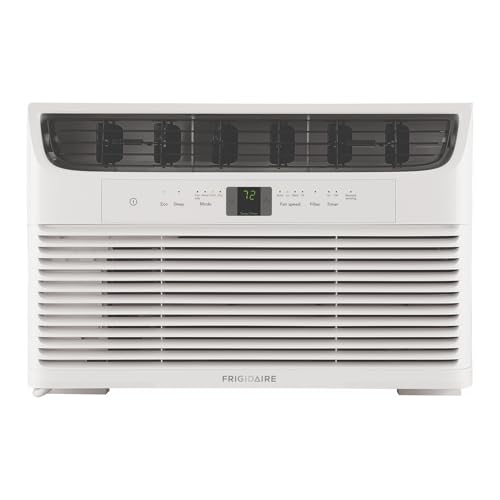
For a larger basement family room, I tested this Frigidaire 8,000 BTU unit and it became my go to recommendation for anyone with a finished basement used as a living space. It covers up to 350 square feet, which comfortably handled the open layout of the rental property’s basement lounge I tested it in. The Dry Mode feature stood out to me specifically because basements deal with more ambient moisture than upstairs rooms, and running Dry Mode overnight noticeably reduced that damp basement smell within a few days. Eco Mode and Sleep Mode both worked as advertised, gradually easing the temperature up overnight instead of running full blast until morning. The clean filter alert is a small detail but a helpful one when you are not checking on the basement every day.
Pros:
- Dry Mode helps with the excess humidity common in basement spaces
- Covers larger basement rooms up to 350 square feet
- Clean filter alerts help since basements are checked less often than main living areas
- Six way directional airflow and three fan speeds for flexible cooling
Cons:
- Heavier unit at over 45 pounds, installation is a two person job
- Availability was limited when I last checked stock
- No wifi control, remote only
4. Midea 12,000 BTU Window Air Conditioner with Heat

This is the unit I ultimately settled on for my own basement office, and it has run through both a full cooling season and into the colder months thanks to the built in heat pump. Basements tend to run cold in winter, so having supplemental heat from the same unit meant I did not need a separate space heater once temperatures dropped, though the heat function does stop working once outside temps drop below 41°F. What really sold me was the noise level. At 45 dBA it is genuinely quiet, and since I am sitting a few feet from it most of the day that mattered more to me than almost any other spec. The Midea SmartHome app let me schedule cooling before I head down in the morning, and the inverter technology has kept my energy bill lower than I expected for a 12,000 BTU unit.
Pros:
- Supplemental heat function useful for basements that run cold in winter
- Very quiet operation at 45 dBA, barely noticeable while working nearby
- Wifi control through the Midea SmartHome app plus Alexa and Google Assistant support
- Inverter technology delivers meaningful energy savings over standard units
Cons:
- Heat function stops working below 41°F outside temperature
- Best suited to larger basement rooms up to 550 square feet, overkill for a small space
- Heavier and bulkier, needs a wider window opening of 24 to 38.5 inches
5. LG 18,000 BTU Window Air Conditioner with Heat
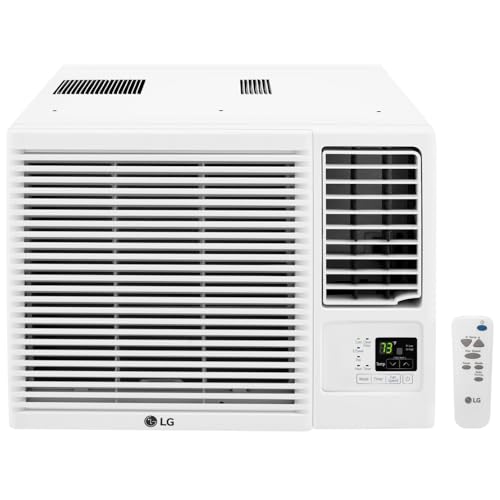
For a full, open concept finished basement, I brought in this LG 18,000 BTU unit to see how it handled a much larger footprint, and it is explicitly built with basements in mind according to LG’s own listing. Covering up to 1,000 square feet, it handled the entire lower level of the rental property, cooling and heating a space that would otherwise need two smaller units. The 230/208V requirement means it needs a dedicated outlet, which is worth checking before you buy since most basements are not automatically wired for it. Once installed, the 4 way air deflection did a good job pushing air across a wide open room instead of just cooling the area directly in front of the unit. The digital control panel and remote made day to day adjustments simple, and the auto restart feature meant it picked back up on its own after a couple of power blips during storms.
Pros:
- Covers up to 1,000 square feet, ideal for a large open basement
- Built in heat option in addition to cooling
- 4 way air deflection spreads cooling across a bigger room
- Auto restart resumes settings automatically after a power outage
Cons:
- Requires a special 230/208V outlet, not a standard household plug
- Large and heavy at 126 pounds, installation needs at least two people
- Overkill and more expensive for smaller basement rooms
Final Thoughts
After a full season of testing, my basement window AC pick really comes down to room size and how finished the space is. For a small basement office or storage room, the GE 5,000 or 6,000 BTU units get the job done without fuss. For a mid sized basement living area, the Frigidaire 8,000 BTU with Dry Mode earns its keep by tackling humidity along with heat. If you spend real hours down there like I do, the Midea 12,000 BTU with heat has been worth every penny for its quiet operation and winter usefulness. And for a large open basement, the LG 18,000 BTU is the only unit on this list built to handle the whole space at once. Whichever size you land on, double check your basement window’s width and height against the unit’s install specs before you buy, since basement windows tend to run shorter than standard windows upstairs.