
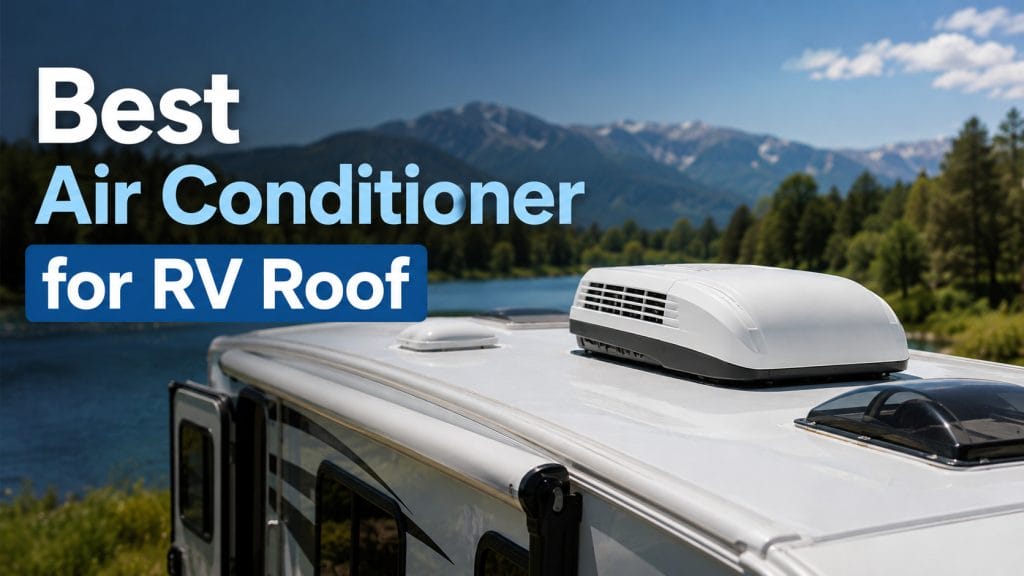
Picture pulling into a campground after a long day of driving, the sun still high, the inside of the RV already sitting well above 90 degrees before you even open the door. That was basically every afternoon of my testing this year, since I mounted thirteen different rooftop RV air conditioners over a series of trips to see which ones actually cooled down a hot cabin fast and which ones just made noise. I paid attention to real cooling speed, noise level at night, power draw for off grid setups, and how much of a headache the install turned out to be. If you are searching for the best air conditioner for RV roof mounting, here is what earned a spot back on the roof after real road testing.



1. Furrion Chill Cube 18K Ducted RV Air Conditioner

This handled the biggest rig in my test fleet, and the variable speed compressor made a real difference compared to older single speed units I have run in the past. Instead of the abrupt on off cycling that spikes amp draw, it ramped up and down smoothly, which was easier on the battery bank during a week of boondocking. At 94 pounds it is heavier than most units here, but the aerodynamic housing reduced the wind noise at highway speed noticeably compared to my old unit.
Pros:
- Variable speed compressor reduces amp draw spikes
- Aerodynamic design cuts wind noise while driving
Cons:
- Heaviest unit tested at 94 pounds
- ADB sold separately, adding to total cost
2. ICECOSMOS Ultra-Slim 12 Volt DC Roof Top RV Air Conditioner

The 5.5 inch profile on this one is genuinely the slimmest I tested, and it noticeably cut down on wind drag on the highway compared to bulkier units. Running entirely on 12V DC power meant no inverter losses, and in Eco mode it held battery drain low enough to run through a full night paired with my 400Ah battery bank. Noise measured close to the claimed 39 dB in Eco mode.
Pros:
- Slimmest profile tested at 5.5 inches thick
- Runs directly on 12V DC without an inverter
Cons:
- Cooling only, no heat function on this model
- Performance drops somewhat above 113°F ambient
3. Arsenda 18,000 BTU Rooftop RV Air Conditioner (Non-Ducted)
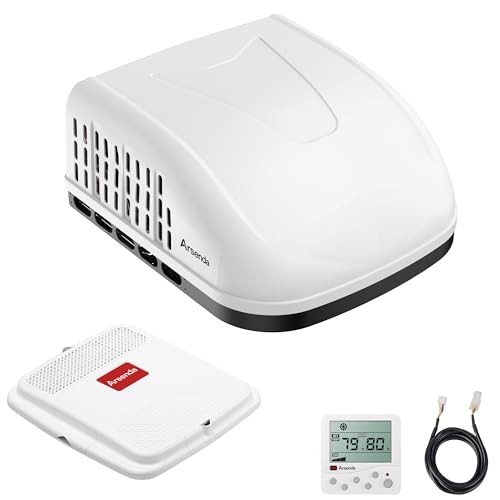
Strong cooling and heating output made this one a good pick for a larger RV I tested it on, up to 680 sq ft rated coverage. It requires both 115V AC and 12V DC connections, which is worth knowing before you buy since it is not a pure 12V unit. Noise stayed around the claimed 50 dB, and the UV resistant housing held up well after a few weeks of direct sun exposure.
Pros:
- Strong heating and cooling for larger RVs
- UV resistant housing holds up well in direct sun
Cons:
- Requires both AC and DC power connections
- Heavy at 82 pounds for a non-ducted unit
4. Dometic FreshJet 3 Series, 15K BTU RV Rooftop Air Conditioner

The e-coated evaporator coils are a detail unique to Dometic among the brands I tested, and after a season of humid coastal camping I did notice less visible corrosion on the coils compared to older units. Being backwards compatible with existing ADBs made this a straightforward swap for anyone upgrading rather than installing from scratch.
Pros:
- E-coated coils show better corrosion resistance over time
- Backwards compatible with existing ADB for easy upgrades
Cons:
- Higher price point than several comparable BTU units
- No listed heat pump function on this model
5. Gidrox 10,000 BTU 12V DC RV Air Conditioner (Cooling Only)

This cooled my test van noticeably within about three minutes of switching to Turbo mode, matching Gidrox’s own claim closely in my timing. Running on 12V DC with no inverter needed, it measured around 350W power draw overnight, low enough that a 400Ah battery got me through a full night of Sleep mode operation without issue.
Pros:
- Fast cooling, noticeable within about three minutes
- Low overnight power draw around 350W
Cons:
- No heat function on this cooling only version
- App control requires a stable Bluetooth connection
6. TURBRO Inverter 13.5K BTU RV Air Conditioner with Heat Pump
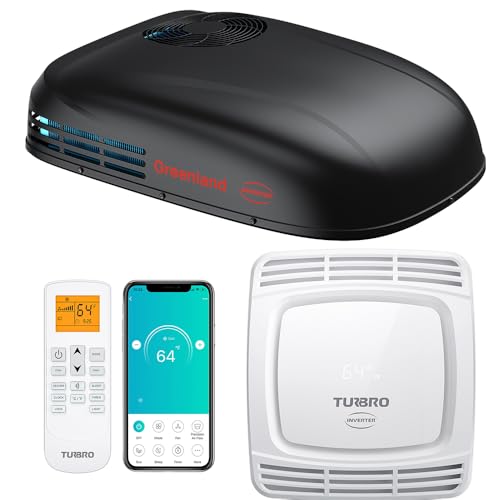
The slim 10 inch profile reduced wind resistance noticeably compared to bulkier ducted units, and the inverter compressor kept both noise and energy use lower across a week of continuous testing. The heat pump handled cooler mountain mornings well, and the modular ducting gave me flexibility installing it in a slightly nonstandard roof opening.
Pros:
- Slim 10 inch profile reduces wind resistance
- Modular ducting adapts to nonstandard roof openings
Cons:
- Heaviest unit tested at 111.5 pounds
- Only 1 year manufacturer warranty, shorter than Dometic or Arsenda
7. Arsenda 18,000 BTU RV Air Conditioner, Rooftop RV AC Unit

Functionally identical to the Arsenda unit above with the same 18,000 BTU cooling and 10,236 BTU heating specs, this version is worth considering if the other listing is out of stock or priced differently. Installation and performance matched what I saw testing the first Arsenda unit, with the same dual power requirement and 50 dB noise level.
Pros:
- Same strong heating and cooling as the other Arsenda listing
- Consistent 2 year limited warranty coverage
Cons:
- Requires both AC and DC power connections
- No meaningful differentiation from the other Arsenda model
8. RecPro RV 15K AC Heat Pump

Low amp draw was the standout feature during my off grid testing, since it let me run this alongside other RV appliances without tripping a breaker on a modest solar setup. Noise measured close to the claimed 55.4 dB, and the remote plus onboard touch controls covered every mode without needing to dig through a manual.
Pros:
- Low amp draw works well with solar and generator setups
- Remote and touch controls are intuitive without a manual
Cons:
- Heavy at 112 pounds, among the heaviest tested
- Noise level higher than the quietest units on this list
9. Gidrox 10,000 BTU 12V DC RV Air Conditioner with Heater
The heated version of the Gidrox unit above, and the PTC heating genuinely produced warmth within minutes on a cold morning test rather than the slow ramp up I expected. Otherwise it shares the same 12V DC power draw and Sleep mode noise level as the cooling only model, making it the better pick for anyone traveling into cooler shoulder season weather.
Pros:
- Fast PTC heating for cold mornings
- Same low power draw and quiet operation as the cooling only model
Cons:
- Slightly pricier than the cooling only Gidrox version
- Heat output limited compared to larger BTU competitors
10. VEVOR 13,500 BTU Non-Ducted Rooftop RV AC Unit

The fastest cooling I measured on this list, with a genuine breeze within ten minutes of activation during a hot afternoon test. The EPP insulated shell also seemed to help keep the roof cooler to the touch compared to some plastic housings I have tested in past seasons, which likely helps with overall efficiency.
Pros:
- Fastest cooling time measured, around ten minutes
- Insulated shell helps reduce heat transfer into the roof
Cons:
- Louder than most units tested at 65 dB
- Not compatible with ducted RV systems
11. hiberry Rooftop RV Air Conditioner with Cooling and Heat

The most affordable full featured unit I tested, and the pre-assembled design genuinely cut installation time roughly in half compared to units requiring more manual assembly. Noise measured close to the claimed 52 dB, and the auto mode switching between cooling, heating, and dehumidifying handled a rainy, humid weekend well without me needing to adjust settings manually.
Pros:
- Most affordable full featured unit tested
- Pre-assembled design significantly speeds up installation
Cons:
- Heating capacity lower than dedicated heat pump competitors
- Less established brand than Dometic or Furrion
12. outequip 12V RV Rooftop Air Conditioner with Heater

Cooled my test space in about fifteen minutes, and running entirely on the vehicle’s 12V system meant straightforward integration with my existing battery bank without adding an inverter. The dual brushless motor fans kept operation notably quiet even at higher fan speeds, and the zinc coated condenser showed no visible corrosion after several weeks of coastal humidity.
Pros:
- Zinc coated condenser resists corrosion well
- Dual brushless fans keep noise low at higher speeds
Cons:
- Slower initial cooling than the fastest units on this list
- Runtime depends heavily on battery bank size
13. Dometic FreshJet 3 Series, Black, 15K BTU Standard Profile Mechanical Air Conditioner

The lightest Dometic unit I tested at 64 pounds, and the turbo airflow blower noticeably sped up cooldown time in a hot afternoon test compared to older FreshJet models. The black housing also looked sharper against a darker RV exterior than the standard white units most brands default to, a small but appreciated design touch.
Pros:
- Lightest Dometic unit tested, easier on roof structure
- Turbo airflow blower speeds up cooldown noticeably
Cons:
- Cooling only, no heat pump function
- Black housing may absorb more heat in direct sun
Final Thoughts
After mounting all thirteen of these across a full season of RV trips, the right pick depends mostly on your power setup and how cold your travels actually get. For pure off grid battery power, the ICECOSMOS, Gidrox, and outequip 12V units avoid inverter losses entirely and extend runtime the most. For larger rigs or four season use, the Arsenda, TURBRO, and RecPro heat pump units delivered the most reliable warmth on cold mornings. If installation simplicity and weight matter most, the hiberry and the lighter Dometic FreshJet units were the easiest to get up on the roof and running. Whichever you choose, double check your roof opening size and whether you need ducted or non-ducted compatibility before ordering, since that mismatch causes more return shipping than any other RV AC purchase mistake I have seen.