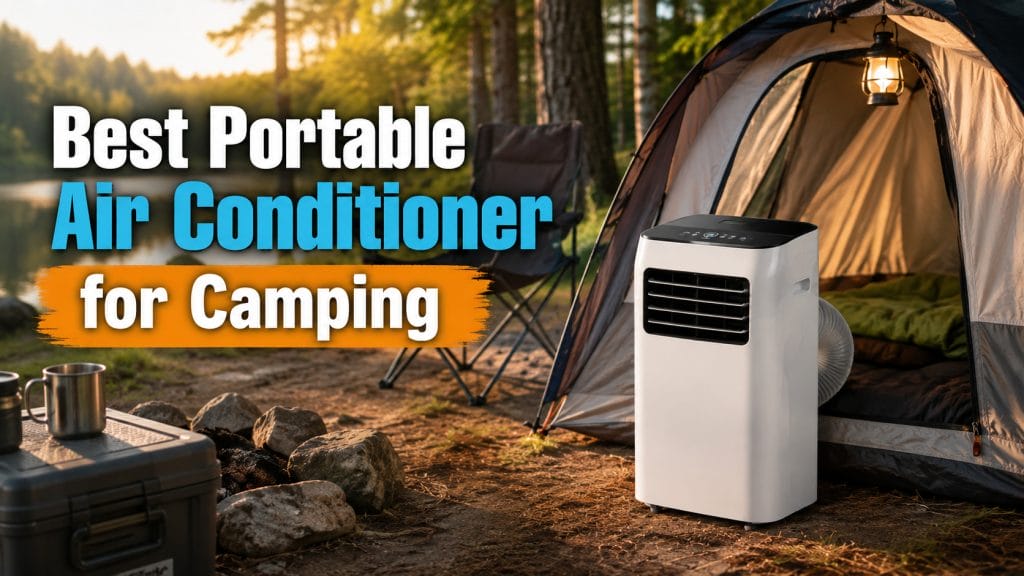
Ever tried sleeping in a tent during a heat wave with nothing but a battery fan pushing warm air around? I have, and it is miserable, which is why I started testing actual portable air conditioners built for camping instead of relying on box fans and wishful thinking. After running these units through real tent nights, RV trips, and a few parked truck bed setups, here is my honest pick for the best portable air conditioner for camping in 2026.


1. Wszrfozn 7000 BTU Portable Camping Air Conditioner

This became my go to unit for weekend tent trips because of how fast it drops the temperature. The 7000 BTU compressor cooled my tent within about 5 minutes, and the drain free design meant no hose unless humidity climbed above 70 percent. At 36 pounds it is heavier than a desktop cooler, but the single carry handle made it manageable to load into a truck bed.
Pros:
- Fast cooling within about 5 minutes
- Drain free operation below 70 percent humidity
- Compact enough for tent, RV, or truck bed use
Cons:
- 36 pounds is noticeable to carry any real distance
- Rated power under 550W needs a solid power source
2. BAYKUL Portable Camping Air Conditioner and Heater

This is the 6 in 1 unit I packed for a fall trip since it handles both cooling and heating in one body. At 28 pounds it is one of the lighter compressor units here, and the compact footprint fit easily into the trunk alongside our other gear. Having both functions in one unit meant no separate heater for chilly nights.
Pros:
- Combines cooling and heating in one unit
- Lighter than most compressor based units at 28 pounds
- Compact dimensions fit easily into a car trunk
Cons:
- Detailed mode and noise specs are limited
- Dual function design adds some bulk versus cooling only units
3. Cybertake S2 Pro Portable Camping Air Conditioner
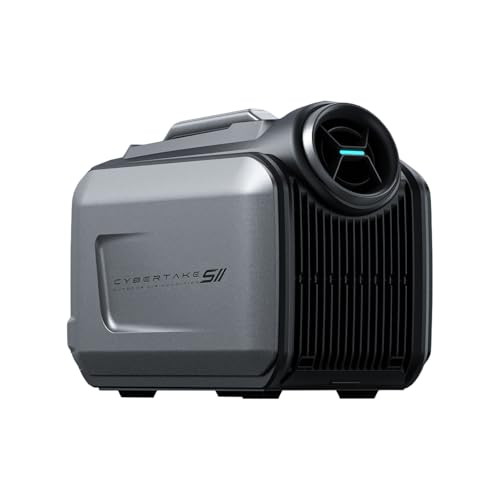
This is the most flexible unit I tested for power sources, running off a wall outlet, a 12 to 24V vehicle connection, or a 48V power station. I used Eco+ mode on a weeklong trip and it sipped power at close to 1kWh per 8 hours, which mattered when running off a power station. The 40dB noise level in eco mode was quiet enough to sleep through.
Pros:
- Three power source options including vehicle and power station
- Eco+ mode delivers strong efficiency at 1kWh per 8 hours
- Whisper quiet at 40dB
Cons:
- Higher price point than most units on this list
- Remote control and boost converter sold separately
4. Countrymod 5000 BTU Portable Air Conditioner for Camping

This was my budget pick for a basic tent setup, running on standard 110V power without special adapters. The adjustable outlet let me point airflow at the sleeping area, and sleep mode at 45dB was quiet enough not to disturb anyone in a two person tent. At 35 pounds it is heavy for its output, but the built in handle helped.
Pros:
- Runs on standard 110V power, no special adapters needed
- Quiet sleep mode at 45dB
- Adjustable air outlet directs airflow precisely
Cons:
- 35 pounds is heavy relative to its 5000 BTU output
- Fewer modes than higher end compressor units on this list
5. CocoButterFly 4 in 1 Portable Air Conditioner

This is the personal cooler I keep for car camping trips where a full compressor unit is overkill. The 1500ML tank runs close to 12 hours on a fill, and it worked well near a sleeping bag for a direct blast of cooler air rather than trying to cool an entire tent. It stays under 35dB, my pick for light sleepers.
Pros:
- Large 1500ML tank lasts up to 12 hours
- Whisper quiet at 35dB or below
- Lightweight at just 2 pounds
Cons:
- Personal cooling only, not a substitute for a tent AC
- Best suited for car camping rather than full tent setups
6. Wszrfozn 7500 BTU Portable Camping Air Conditioner

This is the step up from the 7000 BTU model above, and the extra cooling power showed on hotter afternoons when the smaller unit struggled to keep pace. Setup and controls were identical to its sibling, and the drain free design worked the same way below 70 percent humidity. At 39 pounds it is the heaviest Wszrfozn unit here.
Pros:
- Stronger 7500 BTU cooling for hotter conditions
- Drain free dehumidifying below 70 percent humidity
- Suited for tents, RVs, and vans alike
Cons:
- Heaviest unit in the Wszrfozn lineup at 39 pounds
- Rated power draw is higher than the smaller model
7. outohome 5200 BTU Portable Tent Air Conditioner
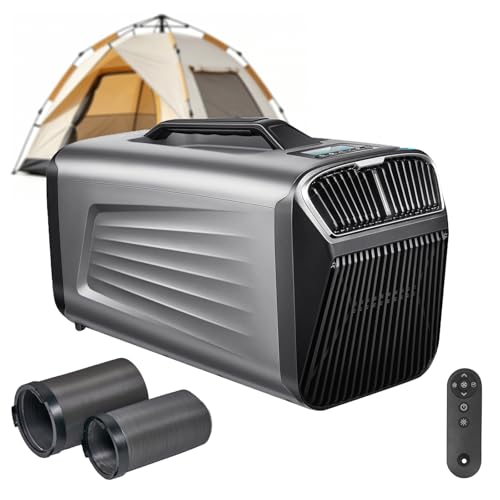
This unit earned a spot for its low power draw, staying under 400W while dropping the temperature by 18°F within 5 minutes. At 32 pounds it was easy to carry with the single hand grip, and the metallic finish held up well after a few dusty trips. The 24 hour timer meant it could shut off automatically after everyone fell asleep.
Pros:
- Low power draw under 400W
- Fast cooling with an 18°F drop in 5 minutes
- Lightweight at 32 pounds with a single hand grip
Cons:
- Sleep mode noise is a bit higher at 46 to 50dB
- Drain pipe still needed above 70 percent humidity
8. BAYKUL 4800 BTU Portable Tent Air Conditioner

This is the unit I recommend for smaller two person tents or roadside rest stops, since the compact footprint takes up minimal space. The 5 in 1 function set covers cooling, super cool, dehumidifying, fan, and sleep mode, more flexibility than a basic single mode cooler. Everything came included in the box, down to the drain pipe and window baffle.
Pros:
- Compact footprint fits smaller tents easily
- 5 in 1 function set including super cool mode
- Full accessory kit included in the box
Cons:
- 550W power draw requires a solid power source
- Mechanical buttons feel less refined than touch panel units
9. Wszrfozn 6000 BTU Portable Camping Air Conditioner
This is the middle option in the Wszrfozn lineup, and it struck the best balance of weight and cooling power for my typical weekend trips. At 36 pounds it matched the 7000 BTU model in portability while running slightly quieter at 52dB in sleep mode. The drain free dehumidifying held up well during a particularly humid coastal trip.
Pros:
- Balanced cooling power at 6000 BTU
- Quieter sleep mode at 52dB compared to other Wszrfozn models
- Strong dehumidifying performance in humid conditions
Cons:
- Still requires a stable power source given the wattage draw
- Similar weight to the stronger 7000 BTU model despite less power
10. Fluencara Mini Portable AC Unit
This personal cooler earned its spot in my glovebox for tent trips where I just needed a direct blast of air near my sleeping bag. The 40oz tank is one of the largest among personal coolers, giving 8 to 10 hours of runtime before a refill, and it runs off a power bank or car charger when there is no outlet nearby.
Pros:
- Large 40oz tank for extended runtime
- Works off power banks and car chargers
- Lightweight at just over 2 pounds
Cons:
- Cools your immediate area, not the whole tent
- Not a substitute for a compressor based camping AC
11. FO KOKO Dual Hose 6800 BTU Camping Tent Air Conditioner and Heating

Rounding out the list is the most versatile unit I tested, combining 6800 BTU cooling with 7500 BTU heating in a dual hose design that cooled noticeably faster than the single hose units above. The 30 second cool and 60 second heat response times meant less waiting after setup, and it runs on 110V power, power stations, or EV V2L systems depending on the trip.
Pros:
- Dual hose design cools up to 50 percent faster
- Both cooling and heating in one 34 pound unit
- Multi power compatibility including power stations and EV V2L
Cons:
- Higher price point given the dual function design
- Dual hose setup takes more space to route than single hose units
Final Thoughts
After running all eleven of these through actual tent nights and camping trips, my honest take is that the best portable air conditioner for camping depends on how you camp. For full tent or RV cooling, the Wszrfozn lineup and the Cybertake S2 Pro deliver real compressor based performance. For simple car camping where you just need personal relief, the CocoButterFly and Fluencara coolers are lighter and easier to pack. Match the unit to your setup and keep a reliable power source on hand.