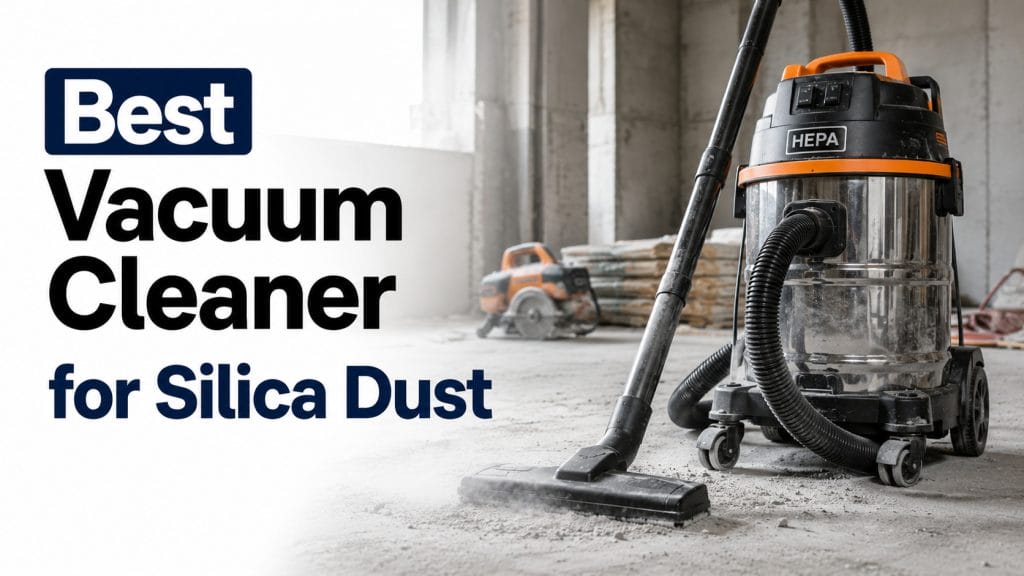
Silica dust is not something you want to treat casually. Fine crystalline silica particles from cutting concrete, grinding stone, or sanding drywall are small enough to lodge deep in the lungs, and a standard shop vac or home vacuum simply is not built to contain that risk. I have run several certified HEPA dust extractors through renovation work at my store and rental property, and the difference between a genuinely OSHA compliant unit and a regular vacuum became obvious fast, both in suction and in how much dust actually stayed contained. If you searched for the best vacuum cleaner for silica dust, here are the units I trust for that specific job.




1. Bosch VAC090AH 9 Gallon Dust Extractor with Auto Filter

This was the first dedicated dust extractor I paired with a grinder during a concrete patching job, and the power tool activation feature made the workflow far smoother than manually switching a separate vacuum on and off. The Power Broker dial let me match suction force to the tool I had attached, and the PRO plus GUARD system gave me real confidence that I was working toward OSHA Silica Table 1 compliance rather than guessing.
Pros:
- Power tool activation syncs vacuum with connected equipment
- Power Broker dial matches suction to the application
- Designed to support OSHA Silica Table 1 compliance
- Strong 150 CFM airflow rate
Cons:
- Bulkier than a standard shop vacuum for smaller jobs
- Filter maintenance is more involved than a basic dry vac
2. Bosch VAC140AH Portable 14 Gallon Dust Extractor with HEPA Filter

I moved up to this larger capacity unit for a longer grinding session where constant emptying would have slowed the whole job down. The automatic filter cleaning every 15 seconds kept suction consistent in a way I genuinely noticed compared to a vacuum without that feature, since performance did not taper off as the fleece bag filled. The HEPA filter capturing 99.97 percent of particles at 0.3 microns gave me confidence the fine dust was actually being contained.
Pros:
- Automatic filter cleaning maintains consistent suction
- HEPA filter captures 99.97 percent of particles at 0.3 microns
- Large 14 gallon capacity reduces downtime for emptying
- Supports OSHA Silica Table 1 compliance
Cons:
- Larger footprint requires more storage space
- Higher price point than general purpose shop vacs
3. Dustless Technologies D1606 True HEPA Shop Vac

I reached for this unit specifically on a job that involved both silica dust and general debris, since it is individually tested and certified rather than carrying a generic HEPA label. Knowing it is certified safe for asbestos, lead paint, and hexavalent chromium in addition to silica gave me confidence using it across a range of hazardous cleanup scenarios, not just one narrow use case.
Pros:
- Individually tested, certified, and serialized HEPA filter
- Certified safe for silica, asbestos, lead paint, and hexavalent chromium
- Complies with EPA RRP and OSHA regulations
- Versatile for wet and dry pickup
Cons:
- Premium certification comes with a higher cost than standard shop vacs
- Heavier unit due to commercial grade build
4. Dustless Technologies HEPA Wet+Dry Pro Vacuum, 8 Gallon

This became my pick for jobs that shifted between dry debris and wet cleanup without warning, since the hydrophobic polyester filter meant I did not have to swap filters mid-task. The 138 CFM motor with 83 inch water lift handled both large debris and fine dust from a single grinding session, and the certified HEPA system gave me the same containment confidence as the other Dustless Technologies unit on this list.
Pros:
- Certified HEPA system prevents dust bypass
- Hydrophobic filter allows dry to wet pickup without changing filters
- Strong 138 CFM and 83 inch water lift performance
- 8 gallon capacity suits mid-sized jobs
Cons:
- Not as high capacity as the larger 14 gallon Bosch unit
- Filter replacement costs add up over time with heavy use
5. Nilfisk Aero 21 5 Gal. Professional Wet/Dry HEPA Vac
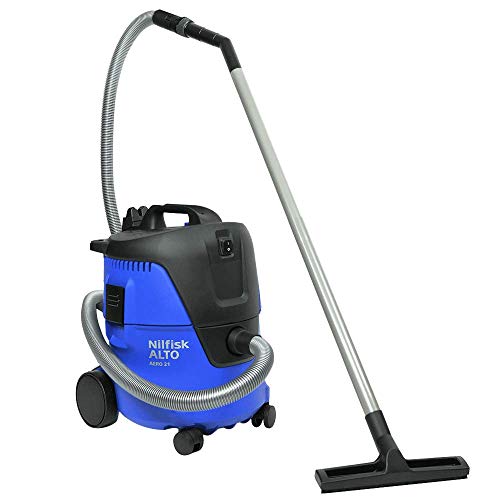
I brought this compact unit into rotation for smaller indoor jobs where a bulkier extractor felt like overkill. The Push and Clean automatic filter system kept suction strong throughout a full grinding session, and the certified HEPA filter rated for lead, silica, asbestos, and mold meant I was not compromising on containment just because the unit was smaller.
Pros:
- Certified HEPA filter rated for silica, lead, asbestos, and mold
- Automatic filter cleaning maintains suction
- Compact 5 gallon size suits smaller jobs
- Strong 127 CFM airflow for its size
Cons:
- Smaller tank means more frequent emptying on bigger projects
- Less airflow than the larger Bosch extractors
6. Nilfisk Aero 31 8 Gal. Professional Wet/Dry HEPA Vac

This larger sibling to the Aero 21 gave me more capacity without giving up the same certified HEPA containment. The tool start feature synced the vacuum directly with a connected grinder, which cut down on the manual switching I had to do with less integrated units. Stainless construction held up well through repeated jobsite use without showing wear.
Pros:
- Certified HEPA filter rated for silica, lead, asbestos, and mold
- Tool start feature syncs with connected power tools
- Larger 8 gallon capacity than the Aero 21
- Durable stainless steel build
Cons:
- Heavier than the compact Aero 21 model
- Premium pricing reflects the professional grade build
7. 8 Gallon 6 Peak HP Wet/Dry Dust Extractor with Semi Auto HEPA Filter

I used this on a drywall sanding job where the semi-automatic dust-shake button let me manually clear the filter on the fly without stopping to disassemble anything. The 1200W motor and 140 CFM airflow kept pace with heavier debris, and the tool auto-start feature made it convenient to pair with a sander for continuous dust collection. Worth noting this unit markets itself around general jobsite dust collection rather than an explicit OSHA Silica Table 1 certification, so I treat it as a solid general dust extractor rather than a dedicated silica compliance tool.
Pros:
- 1200W motor with 140 CFM airflow and strong suction
- Semi-automatic dust-shake button clears the HEPA filter mid-job
- Tool auto-start syncs with connected power equipment
- Handles both wet spills and dry debris
Cons:
- Does not explicitly list OSHA Silica Table 1 certification
- Best suited as a general jobsite extractor rather than a specialized silica compliance unit
Final Thoughts
After running these extractors through actual grinding, sanding, and cutting work, the clearest lesson was that certification is not a marketing detail here, it is the entire point. The Bosch and Dustless Technologies units gave me the most confidence for dedicated silica work thanks to their explicit OSHA Table 1 support and certified HEPA filtration, while the Nilfisk Aero line offered strong performance in a more compact footprint. If you are working with silica dust regularly, do not substitute a regular shop vac or home vacuum for one of these, the containment difference is not cosmetic, it is a genuine health protection.