

Wood that has not dried properly warps, cracks, and ruins a project long after the work is done, and I learned this firsthand after storing lumber in a garage that ran too humid through the summer. Getting the moisture content of wood into the right range, whether it is stacked lumber, a finished piece of furniture, or delicate instrument grade wood, comes down to controlling the humidity around it consistently. After testing a range of units for drying wood in workshops, basements, and even smaller storage cabinets for wood grain items, here is my list of the best dehumidifier for drying wood based on real results rather than spec sheets alone.


1. JJoias 120L Electronic Automatic Drying Cabinet

I used this JJoias cabinet to store a set of wood grain finished equipment cases that were prone to warping in humid weather, and the precise 25 to 60 percent RH control kept the interior consistently dry without any manual adjustment. The 120 liter capacity was large enough to hold several pieces at once, and the semiconductor cooling ran quietly enough that I could keep it in a workshop without added noise.
Pros:
- Precise 25 to 60 percent RH control range
- Large 120 liter capacity for multiple items
- Fully automatic 24 hour humidity monitoring
Cons:
- Not designed for large lumber or furniture pieces
- Low 10W power still requires a stable outlet nearby
2. Camera Dehumidifier Electronic Drying Cabinet, 91L

This cabinet turned out to be a great fit for storing musical instruments and small wood items that are sensitive to humidity swings, and the Swiss made sensor kept readings accurate within a tight three percent margin. Running at only one to three kilowatt hours a month, it was inexpensive to keep going continuously, and the silent design meant it never became a distraction in a quiet workshop corner.
Pros:
- High precision Swiss humidity sensor
- Very low monthly energy consumption
- Silent operation suited for shared workspaces
Cons:
- 91 liter capacity limits it to smaller wood items
- Not intended for whole room or lumber storage
3. Dri-Eaz PHD 200 Commercial Dehumidifier with Pump
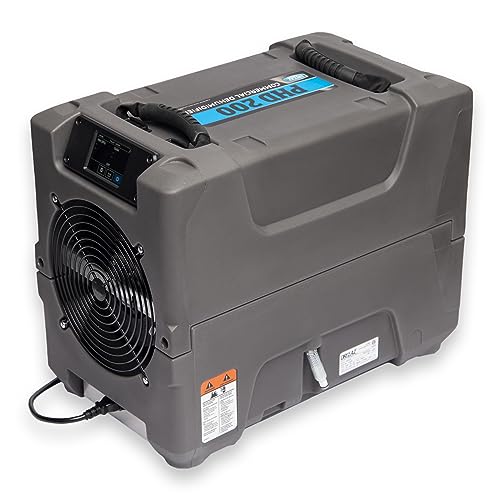
I brought this Dri-Eaz unit onto a job site drying out water damaged wood flooring, and its drying progress readouts made it easy to track exactly when the wood had reached a safe moisture level before proceeding with repairs. Being able to monitor conditions remotely through the Command Center Pro app saved multiple trips back to the site just to check readings.
Pros:
- Remote monitoring through the Command Center Pro app
- Drying progress readouts track wood moisture over time
- Reliable pump drainage for continuous operation
Cons:
- Built for commercial jobs, pricier than home units
- Larger footprint than a typical workshop dehumidifier
4. Kesnos 150 Pint Self-Drying Dehumidifier, 7,500 Sq. Ft.

For a large workshop where I keep rough cut lumber stacked and stickered, this Kesnos 150 pint unit was the strongest performer I tested for whole space wood drying. Adjusting down to 30 percent RH gave the lumber a consistently dry environment to cure in, and the self drying function kept the internal components free of mold buildup during long stretches of continuous use.
Pros:
- Wide 30 to 80 percent adjustable humidity range
- Self drying function prevents internal mold buildup
- Energy Star certified for lower operating costs
Cons:
- 7,500 sq ft coverage is more than most home workshops need
- Larger size takes up meaningful floor space
5. Kesnos 120 Pint Self-Drying Dehumidifier, 6,500 Sq. Ft.
This slightly smaller Kesnos model handled a mid sized garage workshop where I store furniture grade lumber, and it maintained the same reliable 30 to 80 percent range as the larger unit while taking up a bit less space. The self drying feature again proved useful for keeping the unit itself in good shape through months of near constant operation during humid seasons.
Pros:
- Reliable 30 to 80 percent humidity range
- Self drying maintenance feature extends unit lifespan
- Covers up to 6,500 sq ft for mid sized workshops
Cons:
- Still a large unit for smaller storage areas
- Peak capacity unnecessary for light wood drying needs
6. COSTWAY 2000 Sq. Ft Dehumidifier

I used the COSTWAY unit in a smaller hobby workshop where I work on wood furniture repairs, and the drying mode gave a noticeable boost when I needed to speed up moisture removal after a repair involving wood glue. At under 39 decibels, it stayed quiet enough to run while I was actively working in the same room.
Pros:
- Dedicated drying mode speeds up moisture removal
- Quiet operation under 39 decibels
- Simple touch control panel with digital display
Cons:
- 2000 sq ft coverage suits smaller workshops only
- Lower pint capacity than the larger Kesnos units
7. SereneLife 2-in-1 Thermoelectric and Desiccant Dehumidifier

The removable cylinder on this SereneLife unit was genuinely useful for tucking into a closet where I store smaller wood pieces and finished projects between coats of finish. Once the cylinder filled, recharging it on the drying base took just a couple hours, which made it easy to rotate between a few storage spots without needing multiple full sized units.
Pros:
- Removable cylinder fits into tight closets and drawers
- Fast 2 to 3 hour recharge on the drying base
- Maintains a stable 45 to 55 percent humidity range
Cons:
- Not powerful enough for whole workshop drying
- 50 decibel operation is louder than dedicated cabinet units
8. Kesnos 80 Pint Self-Drying Dehumidifier, 5,500 Sq. Ft.
This smaller Kesnos model was my choice for a basement storage area where I keep reclaimed wood waiting to be used in future projects. It maintained a stable humidity level without the higher capacity of its larger siblings, which was more than enough for a space that was not dealing with major moisture problems to begin with.
Pros:
- Right sized capacity for smaller storage rooms
- Self drying feature reduces long term maintenance
- Energy Star certified for efficient continuous use
Cons:
- 5,500 sq ft coverage limits it to smaller spaces
- Not suited for actively drying large batches of lumber
9. 50L Electronic Moisture Proof Drying Cabinet

For small wood grain items like instrument parts and finished small furniture pieces, this compact 50 liter cabinet with three compartments let me organize different projects separately while keeping each one at a controlled humidity. The silent design and accurate microcomputer display made it simple to monitor without any guesswork.
Pros:
- Three compartments for organizing separate wood items
- Accurate microcomputer humidity display
- Fully silent design for shared workspaces
Cons:
- Smallest capacity on this list at 50 liters
- Not suitable for lumber or larger furniture pieces
Final Thoughts
Drying wood properly depends heavily on the scale of what you are working with. For lumber and full workshop drying, the Kesnos 150 pint and 120 pint units gave me the most consistent results across large spaces. For smaller wood items, instruments, or finished pieces, the drying cabinets like the JJoias and 91L camera dehumidifier kept humidity precisely controlled without taking up much room. If you are dealing with water damaged wood on a job site, the Dri-Eaz commercial unit is worth the investment for its monitoring and drying tracking capabilities. Whichever route you choose, consistent humidity control is what actually protects wood from warping, cracking, and long term damage.