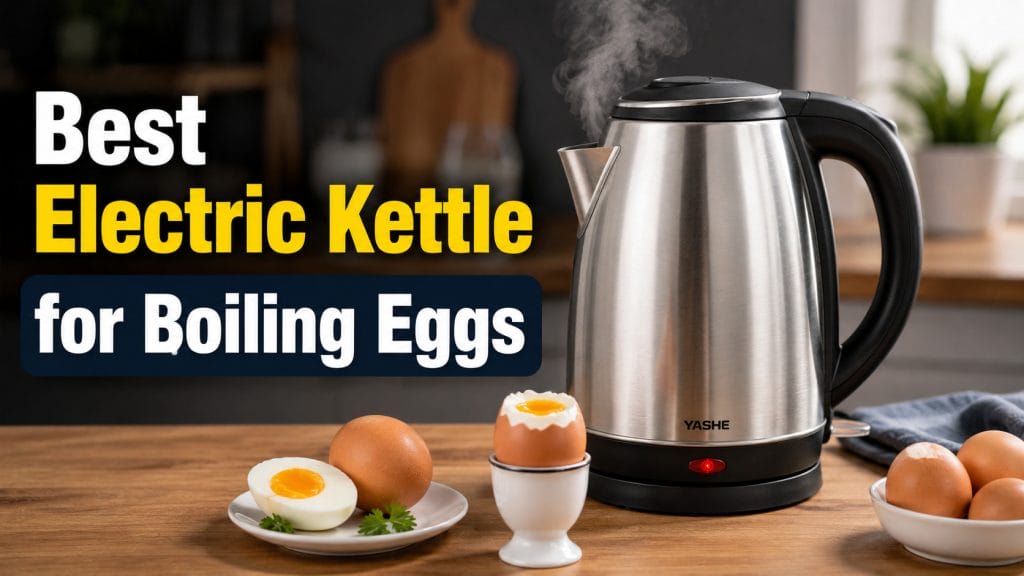
Here is something worth knowing before you buy a kettle just for eggs, the shape and depth of the water tank matters almost as much as wattage, since a shallow kettle can leave the tops of your eggs sitting above the waterline while the bottoms overcook. I learned that the hard way during a week of testing ten electric kettles side by side, timing each one and checking whether the eggs came out evenly cooked from top to bottom.


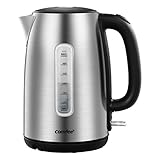


1. Cosori Electric Kettle No Plastic Contact
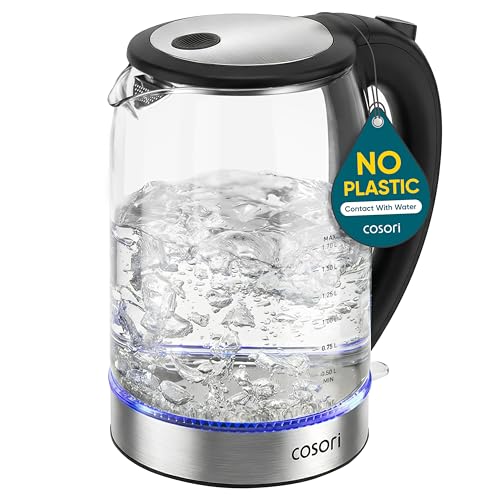
My notes on this one start with how quickly it heated a small batch, boiling half a liter in under three minutes. Since no plastic ever touches the water, I noticed the eggs came out without any faint plastic taste that I have picked up from cheaper kettles in the past.
Pros:
- No plastic contact avoids off flavors
- Fast heating for small batches
- Wide mouth simplifies loading eggs
Cons:
- Shallow tank limits how many eggs fit at once
- No temperature adjustment
2. Chefman 1.8L Stainless Steel Filter Kettle

This kettle earned a spot in my regular rotation because the 1.8 liter tank has enough depth to fully cover a dozen eggs, which fixed the uneven cooking issue I ran into with smaller kettles. The auto shut off also meant I never had to hover over it.
Pros:
- Deep 1.8L tank fully covers a full dozen eggs
- Boil dry protection for unattended use
- Removable lid for thorough cleaning
Cons:
- Takes longer to reach a boil at full capacity
- Filter needs periodic rinsing
3. ICOOKPOT Temperature Control Glass Kettle
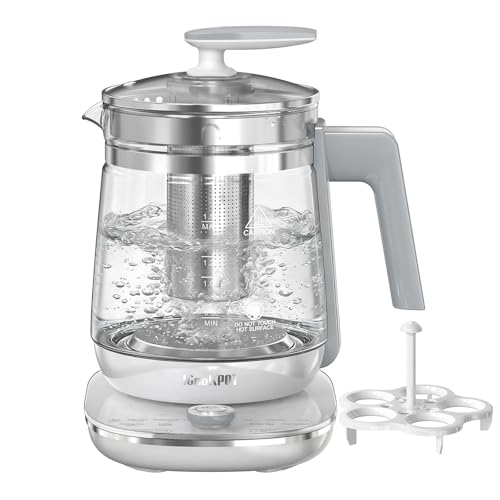
The temperature dial stood out in my testing since I could set a gentler simmer for soft boiled eggs instead of a full rolling boil, which is what most basic kettles force you into. The double wall glass also stayed cool enough to handle safely mid cook.
Pros:
- Adjustable temperature for soft or hard boiled results
- Outer shell stays cool to the touch
- Triple safety shutoff protection
Cons:
- 1.5L tank smaller than some competitors
- Learning the dial takes a try or two
4. OVENTE 1.7L Fast Boiling Kettle in Black
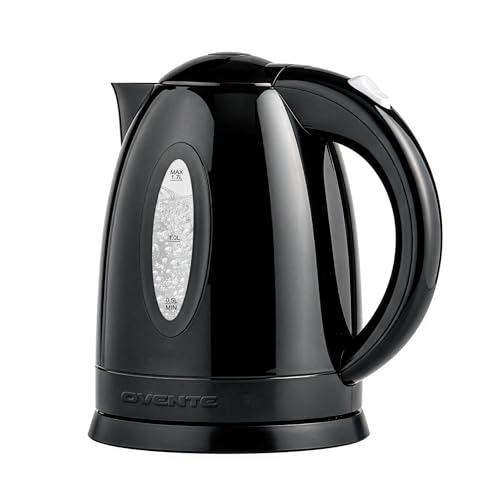
In my notes I flagged the concealed heating element as a plus, since exposed coils in other kettles I have owned tend to collect a chalky film after repeated egg boiling sessions. The removable spout filter kept the water clear throughout testing.
Pros:
- Concealed element resists mineral and residue buildup
- Boils 1.7L quickly
- Removable filter keeps water clean
Cons:
- No temperature settings
- Plastic body feels less durable than steel
5. Chefman 1.2L Glass Kettle with Infuser

This one worked best for small batches of two or three eggs, which is often all I need on a weekday. The LED indicator made it easy to see progress from across the kitchen while I prepped toast at the same time.
Pros:
- LED light shows heating progress at a glance
- Compact size ideal for smaller batches
- Doubles as a tea kettle when not boiling eggs
Cons:
- 1.2L capacity limits larger batches
- Glass body needs careful handling
6. Electric Kettle Health Pot Multifunction

I noted this pot for its dedicated presets and reservation timer, which let me set eggs to start cooking before I even woke up. The keep warm function held finished eggs at a safe temperature until I was ready to peel them.
Pros:
- Presets remove the guesswork on timing
- Reservation timer allows overnight or delayed starts
- Keep warm holds eggs ready to peel
Cons:
- Larger footprint takes up more counter space
- Menu of functions has a learning curve
7. Proctor Silex Adjustable Temperature Hot Pot
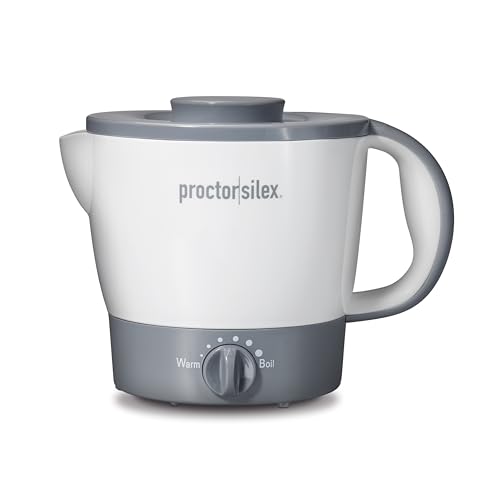
The nonstick interior on this one let me boil eggs directly in the pot without worrying about cleanup afterward. My notes show the adjustable dial gave more control over a gentle simmer than most basic kettles I tested.
Pros:
- Nonstick coating simplifies cleanup
- Adjustable temperature for a gentler simmer
- PFAS free interior
Cons:
- 32oz capacity suits smaller batches only
- Not designed for a fast rolling boil
8. Stariver Portable Travel Kettle

I tested this one on a work trip where a stovetop was not an option, and the constant heating mode handled two eggs at a steady simmer without issue. Its compact folding design made it easy to pack alongside a travel mug.
Pros:
- Compact and foldable for travel or office use
- Constant heating mode suited to cooking eggs
- Stainless steel interior for safe boiling
Cons:
- Small 0.6L capacity limits batch size
- Not built for daily heavy use
9. OVENTE 1.7L Fast Boiling Kettle in White

My testing notes for this model matched the black version almost exactly, since the internals are the same. It reached a full boil in a few minutes and handled a batch of six eggs without any uneven cooking.
Pros:
- Fast, consistent boiling performance
- Concealed heating element for durability
- Filtered spout keeps water clean
Cons:
- No temperature control options
- Color is the only real difference from the black version
10. Amazon Basics Glass Carafe Electric Kettle

I closed out testing with this budget option and was surprised by how well it handled a full dozen eggs. The water level indicator made it simple to measure exactly how much water I needed to cover the eggs before starting.
Pros:
- Powerful 1500W element for quick boiling
- Water level indicator for accurate measuring
- Boil dry protection and auto shut off
Cons:
- Glass carafe is heavier than plastic models
- Basic design with no temperature settings
Final Thoughts
After a week of testing notes across ten kettles, the biggest factor for boiling eggs turned out to be tank depth and capacity rather than raw wattage. The Chefman 1.8L and Amazon Basics carafe handled full batches best, while the ICOOKPOT with its temperature dial gave the most control for soft versus hard boiled results. For smaller households, the Cosori and Chefman glass kettle with infuser are quick and easy to use daily.