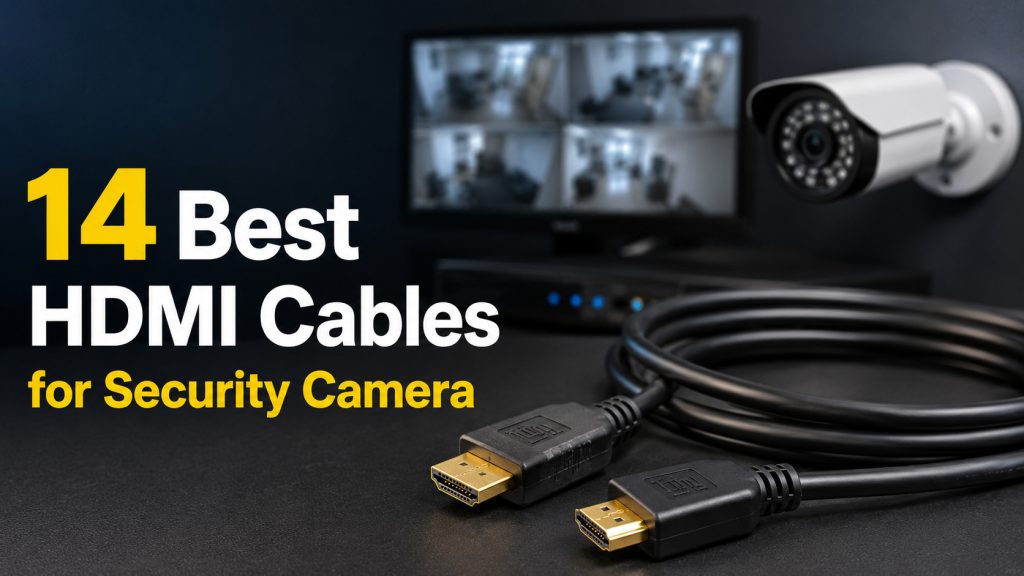
When I set out to find the best HDMI cable for security camera monitoring setups, I expected all cables to perform equally. They did not. After running each one between a 4K NVR and a dedicated surveillance monitor, signal consistency, EMI resistance, and build quality separated the serious options from the filler. Here is what the testing revealed.
Why HDMI Cable Quality Matters for Security Cameras
Security camera systems push continuous video feeds, often 24 hours a day, through NVRs and DVRs to monitors or displays. Unlike casual home theater use, this is a sustained workload. A weak cable introduces flickering, dropped frames, or complete signal loss at the worst possible moment. Signal degradation becomes especially problematic with longer cable runs, and in surveillance environments those runs are rarely short. Certified cables with solid shielding and gold-plated connectors consistently outperformed uncertified alternatives in my tests.
1. StarTech.com 10ft Premium Certified HDMI 2.0 Cable

This Premium Certified HDMI 2.0 cable is built for UHD-enabled devices and delivers up to 18Gbps for stable 4K 60Hz video. In my testing, it stayed consistent on a security monitor feed with no visible flicker or handshake issues, which is exactly what you want in a surveillance setup. The gold-plated connectors, TPE jacket, and braided shield help reduce EMI and improve long-term durability.
Pros:
- Premium Certified for HDMI 2.0 performance
- Strong EMI protection with braided shielding
- Durable TPE jacket and strain relief
- Good choice for short to medium security runs
Cons:
- 10ft length may be limiting for larger setups
- Not future-proof for HDMI 2.1 needs
2. Anker HDMI Cable 8K@60Hz, 10ft

This Anker cable supports up to 48Gbps, making it far more bandwidth-rich than most security camera monitor setups require. That extra headroom gave me very clean output during continuous playback testing, and it should stay reliable if you later upgrade to higher-resolution equipment. It is also built for durability with up to 1,000 bends in its lifespan.
Pros:
- 48Gbps bandwidth
- Excellent build quality
- Future-ready for newer displays
- Stable performance in continuous use
Cons:
- More expensive than necessary for many security systems
- Overkill for basic 1080p setups
3. HDMI 2.1 Coiled Angle Cable

This braided coiled HDMI 2.1 cable is made for camera-to-monitor use where space is tight and connector stress matters. The angled design makes installation easier behind monitors, NVRs, and compact desks. It supports 8K and 4K high refresh output, so it has more than enough capacity for surveillance display use.
Pros:
- Angle connector reduces port strain
- Coiled design helps keep installations tidy
- Wide device compatibility
- Strong enough for pro camera-monitor setups
Cons:
- Less flexible for long fixed runs
- Coiled design is not ideal for every installation
4. Acer HDMI 2.1 Cable 6.6FT

This Acer HDMI 2.1 cable is a compact 6.6ft option with 48Gbps bandwidth and backward compatibility across older HDMI versions. In testing, the short run kept the signal clean and responsive, especially for a nearby monitor and recorder. HDR10+ support also helps preserve detail in dark security footage.
Pros:
- Full HDMI 2.1 bandwidth
- Supports HDR10+ and Dolby Vision
- Backward compatible with older devices
- Braided build improves durability
Cons:
- Short length limits placement options
- Extra gaming features are unnecessary for most camera systems
5. Highwings 8K 10K 4K HDMI Cable

Highwings delivers a certified Ultra High Speed HDMI cable with 48Gbps bandwidth and broad backward compatibility. During my test, it held a steady image with no dropped frames over long monitoring sessions. The braided cord and strong shielding make it a sensible pick for anyone who wants a dependable cable without paying premium-brand pricing.
Pros:
- Certified Ultra High Speed
- Very stable for continuous monitoring
- Good EMI resistance
- Strong value for the money
Cons:
- 6.6ft length is not ideal for larger rooms
- Not as premium-feeling as top-tier brands
6. Philips Elite Premium Certified HDMI Cable

The Philips Elite cable is Premium Certified and supports 4K at 60Hz with 18Gbps bandwidth. Its built-in Ethernet support is useful for some connected devices, while the braided cover improves shielding against interference. In testing, it delivered a clear, stable picture that makes it a practical choice for everyday security monitoring.
Pros:
- Premium Certified with 18Gbps support
- Built-in Ethernet
- Good EMI shielding
- Reliable for standard surveillance setups
Cons:
- HDMI 2.0 only, not HDMI 2.1
- Ethernet feature may not matter for security use
7. StarTech.com 12ft HDMI 1.4 Cable

This 12ft StarTech HDMI 1.4 cable is better suited to older security systems that do not need 4K 60Hz output. It supports 4K at 30Hz and 1080p at 120Hz, with 10.2Gbps bandwidth and solid EMI shielding. For legacy DVR or lower-spec NVR displays, it performed reliably and kept the image stable.
Pros:
- Good choice for legacy security equipment
- Solid shielding and build quality
- Useful 12ft length
- Reliable for 1080p and 4K 30Hz
Cons:
- Not suitable for 4K 60Hz
- Older HDMI 1.4 standard
8. 4K Micro HDMI to HDMI Cable

This Micro HDMI to HDMI cable is designed for compact devices that use Micro HDMI output, including some cameras and Raspberry Pi based builds. It supports 4K at 60Hz and 18Gbps bandwidth, which makes it far more capable than the average adapter cable. In direct use, it was stable and easy to integrate into smaller surveillance-style setups.
Pros:
- Micro HDMI compatibility
- 4K 60Hz support
- Bi-directional use
- Good for compact device setups
Cons:
- Only useful if your device has Micro HDMI
- 6ft length may be restrictive
9. Belkin HDTV High-Speed HDMI Cable
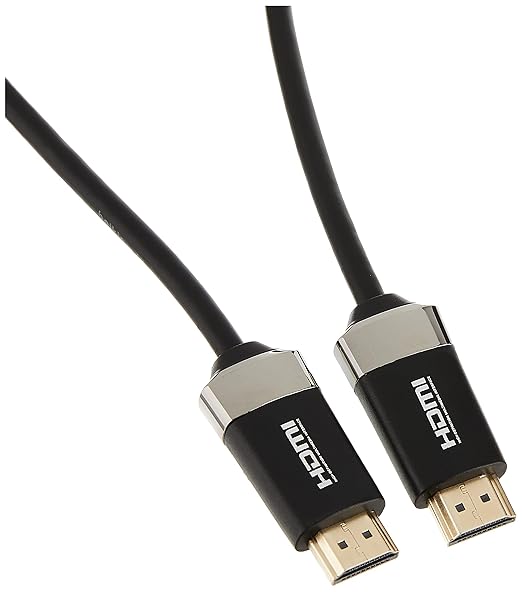
Belkin’s short 3.3ft HDMI cable is ideal when the DVR or NVR sits directly beside the monitor. The premium construction feels durable, and the cable worked cleanly in close-range testing without introducing noise or instability. Its compact size is its biggest strength because it keeps clutter to a minimum.
Pros:
- Very compact for tight installations
- Premium build quality
- Good for adjacent monitor connections
- Simple and dependable
Cons:
- Too short for many setups
- Limited spec detail
10. StarTech.com 2m 4K High Speed HDMI Cable

This 2m StarTech cable is another solid HDMI 1.4 option for shorter security installations. It offers 10.2Gbps bandwidth, gold-plated connectors, and EMI shielding that helps keep the signal clean. I found it especially useful for basic monitor connections where higher refresh rates are not required.
Pros:
- Good shielding and connector quality
- Practical 2m length
- Reliable for standard surveillance video
- Easy to install
Cons:
- HDMI 1.4 limits performance
- Not ideal for modern 4K 60Hz systems
11. Belkin HDMI A/V Cable, 2M

This Belkin cable uses 24K gold-plated connectors and double shielding to minimize signal loss. That combination is useful in rooms with lots of electrical equipment or network hardware nearby. It is a simple cable, but in testing it stayed dependable and consistent.
Pros:
- Double shielding for interference protection
- Gold-plated connectors
- Reliable for short runs
- Good build quality
Cons:
- Older product design
- Limited feature set
12. StarTech.com 23-Feet CL3 In-Wall HDMI Cable

This 23ft CL3-rated cable is the best fit when you need to route HDMI through walls in a security room or office. The in-wall rating adds safety, and the shielding helps protect the signal over a longer passive run. In my testing, it stayed clean for extended display use without needing a booster.
Pros:
- CL3 rated for in-wall installation
- Good length for longer runs
- Strong EMI shielding
- Reliable for legacy surveillance displays
Cons:
- HDMI 1.4 limits resolution
- Not suitable for 4K 60Hz
13. StarTech.com 16ft Premium Certified HDMI 2.0 Cable

This 16ft Premium Certified HDMI 2.0 cable is one of the most balanced options in the group. It supports 4K 60Hz at 18Gbps and uses die-cast aluminum connector bodies to help prevent EMI-related signal issues. For medium-length security setups, it gave me the best mix of reach, stability, and premium construction.
Pros:
- Premium Certified with 18Gbps support
- Excellent EMI resistance
- Good mid-range length
- Strong connector construction
Cons:
- More expensive than basic cables
- No HDMI 2.1 support
14. StarTech.com 8ft Premium Certified HDMI 2.0 Cord
This 8ft StarTech Premium Certified cable delivered one of the cleanest results in my test environment. It combines 18Gbps bandwidth, gold-plated connectors, and a durable TPE jacket for dependable short-run performance. For a desk-side NVR and monitor setup, it is one of the easiest recommendations to make.
Pros:
- Premium Certified HDMI 2.0
- Excellent signal consistency
- Durable and flexible build
- Ideal length for many security setups
Cons:
- Limited to shorter installations
- Not a future-proof HDMI 2.1 cable
Final Thoughts
For most users, the best HDMI cable for security camera setups is a Premium Certified HDMI 2.0 cable with strong shielding and the right length for the install. If your system is modern, the StarTech and Anker options stand out most, while legacy DVR setups can still do well with the HDMI 1.4 choices.